

Introduction
Every successful building project begins with understanding the ground beneath it. Before a foundation is designed or construction starts, it is essential to know whether the soil can safely support the proposed structure.
Soil may appear firm and stable at the surface, but conditions can change significantly just a few metres below ground. Different layers may contain sand, clay, gravel, rock, loose fill, organic material or groundwater. These conditions directly influence foundation selection, structural safety, construction cost and the long-term performance of a building.
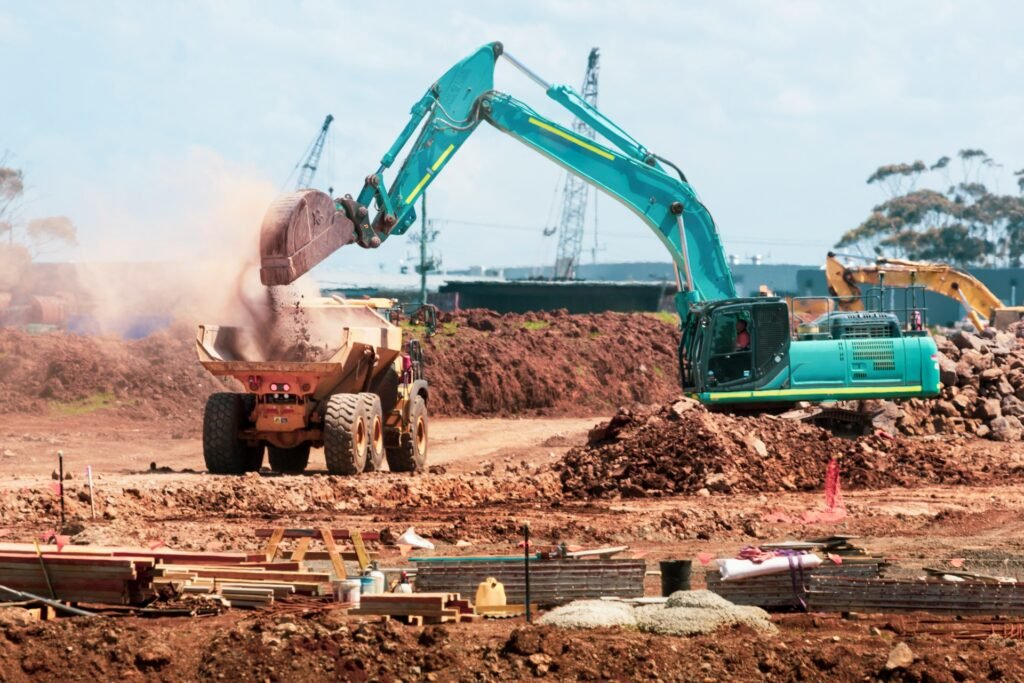
Soil testing is therefore one of the most important steps before construction begins.
1. What Is Soil Testing?
Soil testing, often called a geotechnical investigation, is the process of examining the ground at a proposed construction site.
Engineers and geotechnical professionals collect information about the soil and subsurface conditions through field investigations and laboratory testing.
The investigation can help determine:
- Soil type and classification
- Soil strength
- Bearing characteristics
- Groundwater conditions
- Soil density
- Settlement potential
- Depth of suitable founding strata
- Potential ground-related risks
The information obtained is used by engineers when designing foundations and other parts of the project.
2. Why Is Soil Testing Necessary?
The foundation transfers the weight of a building to the ground. If the soil cannot safely support the loads, the building may experience excessive settlement or other problems.
Without adequate information about the soil, designers may have to make assumptions. Those assumptions can result in an unsuitable foundation system.
Soil testing helps replace assumptions with site-specific information.
For example, a small residential building may be suitable for a shallow foundation on competent soil. If the same type of building is constructed on very soft or weak ground, a different foundation solution may be necessary.
3. Soil Conditions Can Change Across a Site
One of the biggest misconceptions in construction is that soil is uniform everywhere.
A single site may contain several different soil layers.
For example, the upper layer could consist of loose fill, followed by clay, then dense sand. Another part of the same site may have weathered rock.
This variation is why proper investigation is important, particularly for large buildings.
The investigation should be planned according to the size and complexity of the proposed development.
4. Understanding Soil Bearing Capacity
One of the key considerations in foundation design is the ability of the soil to support the loads imposed by the structure.
This is commonly discussed in terms of bearing capacity.
If the foundation applies excessive pressure to the soil, the ground may deform excessively or experience failure.
Engineers use information from the geotechnical investigation to determine suitable foundation dimensions and design parameters.
The objective is to ensure that the foundation transfers loads safely while keeping settlement within acceptable limits.
5. Settlement: A Major Concern
Settlement occurs when the ground beneath a building deforms under load.
Some settlement can occur in many buildings, but excessive or differential settlement can become a serious problem.
Differential settlement means different parts of a building settle by different amounts.
Possible signs can include:
- Cracks in walls
- Uneven floors
- Distorted openings
- Doors and windows becoming difficult to operate
- Gaps between building elements
- Visible structural movement
The causes of settlement can be complex. Soil testing helps engineers understand the ground conditions and assess settlement-related risks before construction.
6. Types of Soil Commonly Encountered
Different soils behave differently under building loads.
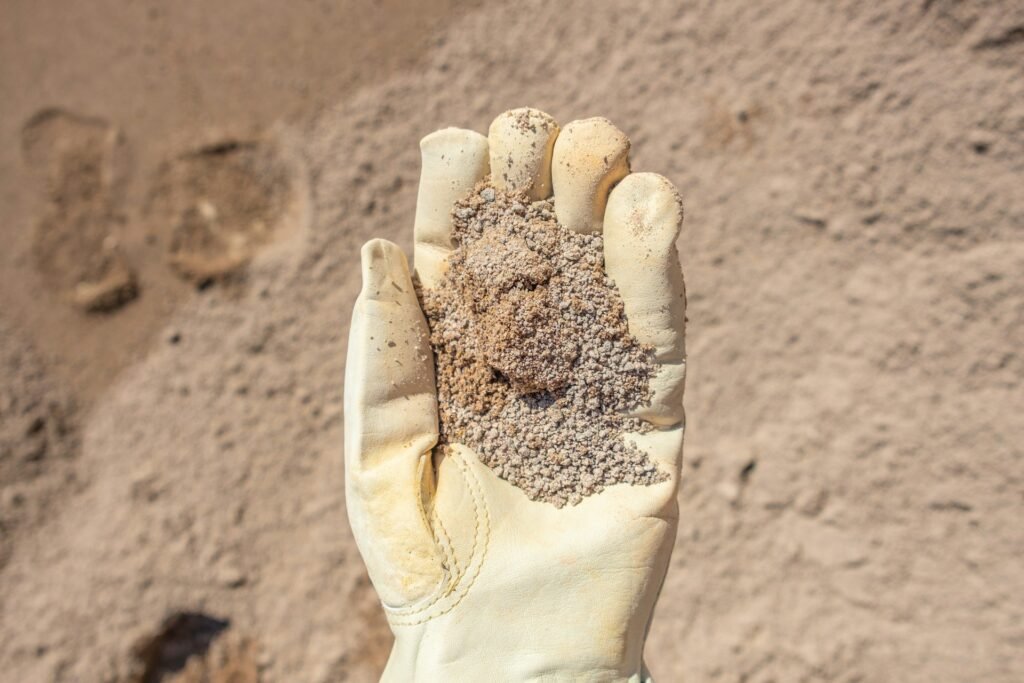
Sand
Sand can have good drainage characteristics, but its behaviour depends on density and other factors.
Clay
Clay can vary considerably in strength and compressibility. Some clay soils may undergo significant settlement or volume changes.
Gravel
Dense gravel can provide good support and drainage characteristics, depending on site conditions.
Silt
Silt can have different engineering properties from sand and clay and requires appropriate investigation.
Filled Ground
Land that has been artificially filled may contain materials of varying quality and compaction. Its suitability for supporting structures must be assessed.
Expansive Soil
Some clay-rich soils can expand when they absorb water and shrink when they dry. This repeated movement can affect structures if not properly considered.
7. Groundwater Investigation
Groundwater is another important factor in foundation construction.
A high groundwater level can affect excavation, foundation construction and long-term durability.
Groundwater can also influence soil behaviour and may require temporary or permanent water-management measures.
During a geotechnical investigation, engineers may examine groundwater levels and how they vary with seasons or other conditions.
Understanding groundwater conditions before construction can help prevent unexpected problems during excavation.
8. Common Soil Investigation Methods
Different investigation techniques may be used depending on the project.
Boreholes
Boreholes allow engineers to investigate soil layers below the surface and obtain samples or other information.
Standard Penetration Test
The Standard Penetration Test (SPT) is widely used in geotechnical investigations to obtain information related to soil resistance and subsurface conditions.
Cone Penetration Test
The Cone Penetration Test (CPT) involves pushing an instrumented cone into the ground and measuring resistance continuously with depth.
Trial Pits
Trial pits allow direct visual examination of relatively shallow ground conditions.
Laboratory Testing
Collected soil samples may be tested to determine properties such as moisture content, particle-size distribution, density, plasticity and strength, depending on the soil and project requirements.
The investigation method should be selected by qualified professionals according to the project’s needs.
9. Laboratory Soil Tests
Different laboratory tests may be performed depending on the type of soil and engineering requirements.
Common tests include:
- Moisture content
- Grain-size analysis
- Atterberg limits
- Density
- Compaction characteristics
- Shear strength
- Consolidation
- Permeability
Each test provides different information.
For example, particle-size analysis helps classify soil, while consolidation testing can provide information relevant to settlement behaviour in certain soils.
Not every project requires every test. The testing programme should be based on the site and proposed development.
10. Choosing the Right Foundation
Soil investigation plays an important role in selecting the appropriate foundation system.
Possible foundation systems include:
- Isolated footings
- Combined footings
- Strip foundations
- Raft or mat foundations
- Pile foundations
- Bored piles
- Other specialised foundation systems
A shallow foundation may be appropriate where suitable soil exists close to the surface.
Deep foundations may be considered where near-surface soil is unsuitable or where structural and settlement requirements make deeper support necessary.
The final selection must be based on engineering design rather than a general rule.
11. Soil Testing and Construction Cost
Some people view soil testing as an additional expense. In reality, it can help prevent much larger costs later.
Without adequate investigation, unexpected ground conditions may be discovered after construction begins.
This can result in:
- Foundation redesign
- Additional excavation
- Increased concrete or reinforcement requirements
- Dewatering
- Construction delays
- Additional specialist work
A relatively small investment in proper investigation can therefore help reduce uncertainty and improve project planning.
12. Soil Testing for Residential Buildings
Soil investigation is not only important for large commercial projects.
Residential buildings also depend on suitable foundation design.
The appropriate level of investigation depends on factors such as:
- Building size
- Number of floors
- Structural system
- Site conditions
- Local geology
- Groundwater
- Previous land use
- Foundation type
A professional should determine the appropriate scope of investigation for the proposed building.
13. Soil Testing for High-Rise Buildings
High-rise buildings impose much larger loads on the ground and often require more detailed geotechnical investigation.
Engineers may need information about soil properties at considerable depth.
Deep foundation systems may be considered where appropriate.
The interaction between the building, foundation and ground becomes particularly important for tall structures.
Detailed geotechnical data can help structural and foundation engineers develop a safer and more economical design.
14. Importance of Soil Testing in Urban Areas
Urban construction can present additional challenges.
A new building may be surrounded by existing structures, roads, underground utilities and other infrastructure.
Excavation can affect nearby properties if the ground is not properly understood and managed.
Soil investigation can provide valuable information for excavation, foundation design and groundwater management.
For projects near existing buildings, engineers may also need to consider how construction activities could influence neighbouring foundations and surrounding ground.
15. Construction on Previously Developed Land
Some construction sites have been used previously for buildings, industries, storage or other activities.
Such sites may contain:
- Old foundations
- Buried debris
- Artificial fill
- Underground structures
- Contaminated materials
- Poorly compacted ground
A proper site investigation can help identify unexpected conditions before major construction begins.
Where contamination is suspected, additional environmental investigation may also be necessary.
16. Soil Testing and Earthquake Considerations
In regions where earthquakes are a significant concern, understanding ground conditions becomes especially important.
Certain loose, saturated soils can be susceptible to liquefaction under strong earthquake shaking.
Geotechnical engineers may therefore investigate whether site conditions create such risks and provide appropriate design recommendations.
Structural design and foundation design must work together to address seismic requirements where applicable.
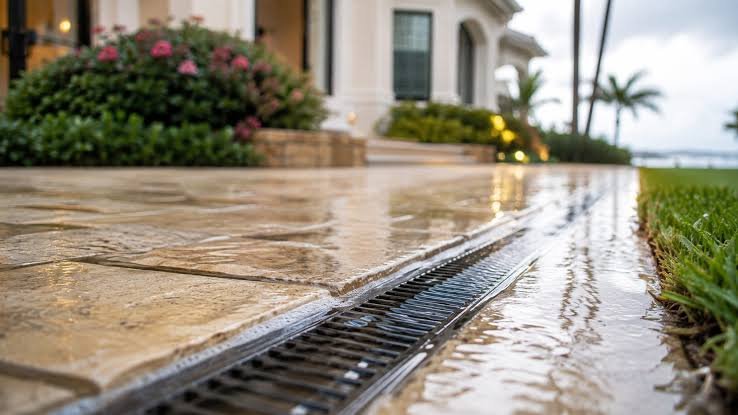
17. Soil and Drainage
Soil properties also influence how water moves through a site.
Some soils drain relatively quickly, while others have low permeability and retain water.
Understanding drainage conditions can help engineers plan:
- Surface drainage
- Foundation drainage
- Basement protection
- Stormwater management
- Groundwater control
Good drainage planning can reduce moisture-related problems around foundations.
18. What Happens If Soil Testing Is Ignored?
Skipping or inadequately performing soil investigation can create significant uncertainty.
Potential problems may include:
- Unexpected settlement
- Foundation cracking
- Uneven floors
- Water entering excavations
- Foundation redesign
- Construction delays
- Increased project costs
- Damage to nearby structures
Not every foundation failure is caused by poor soil investigation, but inadequate understanding of ground conditions can increase project risk.
19. Soil Testing Report
After the investigation and testing are completed, a geotechnical professional typically prepares a report.
Depending on the project, the report may contain:
- Site description
- Ground conditions
- Soil classification
- Borehole or test results
- Groundwater information
- Laboratory test results
- Engineering parameters
- Settlement considerations
- Foundation recommendations
- Excavation recommendations
- Drainage or groundwater considerations
The structural and foundation designers can use this information when developing the project design.
20. Soil Testing Is Part of Good Construction Planning
Soil investigation should ideally take place before finalising the foundation design.
The earlier potential ground problems are identified, the easier it is to incorporate appropriate solutions into the project.
It should be treated as part of the design process rather than as an optional activity carried out only when problems appear.
Good construction planning follows a simple principle:
Understand the ground first, then design the foundation.
21. Modern Technology in Soil Investigation
Geotechnical engineering is also benefiting from modern technology.
Digital surveying, advanced field instruments, geographic information systems, laboratory automation and improved data-analysis techniques can help professionals understand subsurface conditions more effectively.
For large projects, multiple sources of information may be combined to develop a more comprehensive ground model.
However, technology does not eliminate the need for professional judgement. Ground conditions can be complex, and experienced geotechnical professionals are required to interpret investigation results correctly.
22. The Role of Engineers
A successful soil investigation involves more than collecting soil samples.
Geotechnical engineers interpret the field and laboratory information and convert it into recommendations relevant to the proposed structure.
Structural engineers then use these recommendations to develop the foundation and structural design.
Architects, contractors, surveyors and other professionals also need to coordinate their work with the ground conditions.
This cooperation helps ensure that the foundation design is practical as well as structurally appropriate.
Conclusion
Soil testing is one of the most important steps before construction because every building ultimately depends on the ground beneath it.
A strong structure cannot compensate for an inappropriate foundation system or poorly understood ground conditions. By investigating soil strength, soil layers, groundwater, settlement characteristics and other relevant factors, engineers can make better decisions about foundation design and construction.
Proper soil investigation can improve safety, reduce uncertainty, control construction costs and help prevent expensive problems in the future.
Whether it is a small house, apartment building, commercial complex, industrial facility or high-rise tower, understanding the ground should come before building on it.
Before you build upward, understand what lies beneath.
About The Author