

Introduction
The construction industry is continuously looking for materials that can provide strength, durability and cost efficiency while reducing the environmental impact of building activities. Fly ash bricks have become an important alternative masonry material because they make productive use of fly ash, an industrial by-product, while providing consistent dimensions and useful engineering properties.
Fly ash bricks are manufactured using fly ash, cementitious materials, sand or stone dust and water. The exact composition and manufacturing process can vary according to the technology and applicable standards.
They are widely considered for residential buildings, commercial projects, industrial structures and other masonry applications where their properties are suitable.
What Are Fly Ash Bricks?
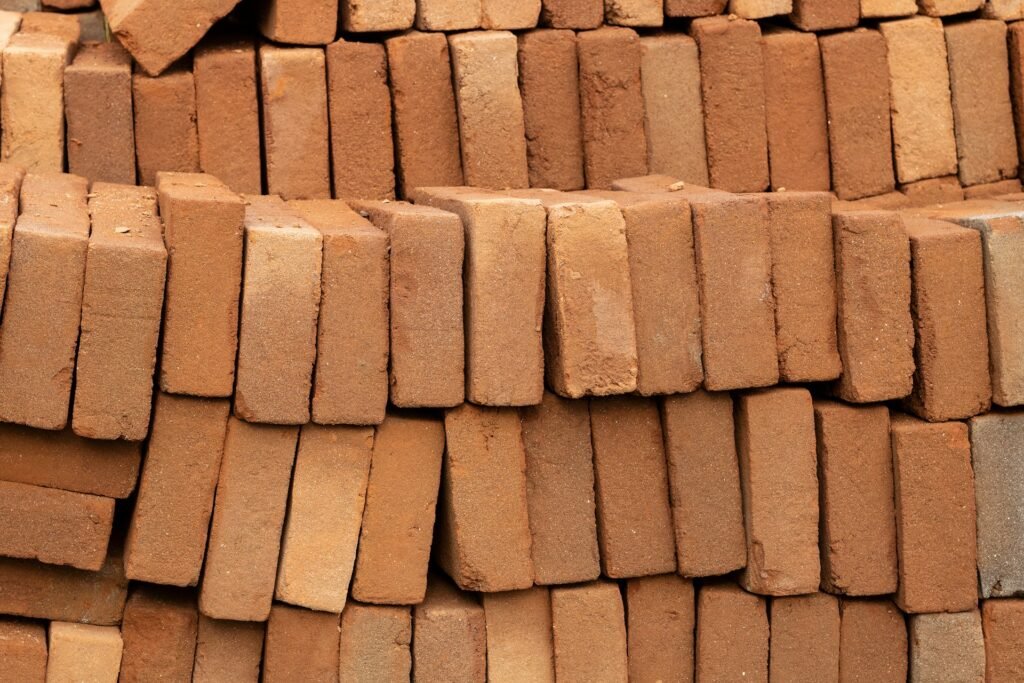
Fly ash is a fine material generated during the combustion of coal in thermal power plants. Instead of treating this material solely as waste, suitable fly ash can be incorporated into construction products.
Fly ash bricks are manufactured by combining fly ash with other ingredients and forming the mixture under controlled conditions. The bricks are then cured to develop the required strength.
Compared with many traditionally fired clay bricks, fly ash bricks are generally manufactured without the same type of kiln-firing process.
Their performance depends heavily on the quality of raw materials, mix proportions, manufacturing process and curing.
How Fly Ash Bricks Are Manufactured
The manufacturing process generally involves preparing the required raw materials and mixing them in controlled proportions.
Fly ash is combined with suitable binders and fine aggregates. Water is added to obtain the required consistency.
The mixture is then placed into a brick-making machine and compacted under pressure to form uniform units.
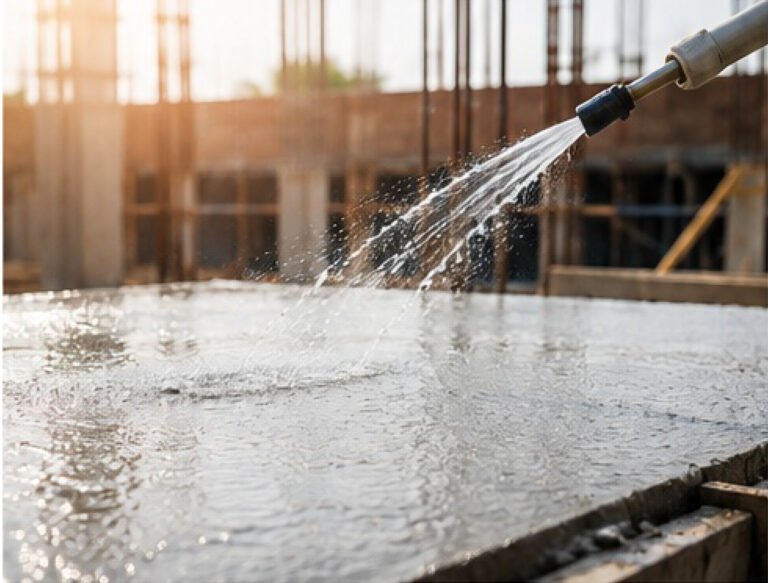
After moulding, the bricks undergo curing. Proper curing is important because it allows the cementitious components to develop strength.
Finally, the bricks are inspected and tested before being supplied for construction.
A controlled manufacturing process can provide relatively consistent dimensions and quality.
Consistent Shape and Size
One of the important advantages of fly ash bricks is their dimensional uniformity.
Machine production can produce bricks with consistent shapes and sizes when manufacturing is properly controlled.
Uniform masonry units can help:
- Improve wall alignment
- Reduce variations in joint thickness
- Reduce mortar consumption
- Improve finishing quality
- Reduce construction wastage
Good workmanship is still essential, because even dimensionally consistent bricks require proper laying and jointing.
Strength and Structural Performance
Fly ash bricks can achieve useful compressive strength when manufactured correctly.
Their suitability depends on the required strength grade and the application.
They can be used for masonry walls in many types of buildings, provided the selected product meets the relevant project specifications and standards.
It is important to avoid assuming that every fly ash brick has the same strength. Manufacturers and suppliers should provide appropriate test information for the product being used.
Reduced Water Absorption
Fly ash bricks can have relatively low water absorption compared with some conventional clay bricks, depending on their composition and manufacturing quality.
Lower water absorption can be beneficial because excessive moisture movement through masonry can contribute to dampness and deterioration.
However, water absorption requirements should always be checked against the applicable standard and the specific product.
Proper damp-proofing, waterproofing and drainage remain important even when fly ash bricks are used.
Smooth Surface Finish
Fly ash bricks generally have a relatively smooth and uniform surface because they are manufactured using moulding and compaction processes.
This can provide advantages during finishing work.
Depending on the project requirements and workmanship, a smoother masonry surface may reduce the thickness of plaster or finishing materials required.
However, plaster requirements should be determined based on the actual wall surface and specified finish rather than assuming that plaster is always unnecessary.
Lower Material Wastage
The uniform shape of machine-produced fly ash bricks can reduce breakage and wastage during masonry construction.
Better dimensional consistency can also improve planning and reduce unnecessary mortar consumption.
Material efficiency depends on careful handling, storage and construction practices.
Environmental Benefits
One of the major attractions of fly ash bricks is their use of fly ash, an industrial by-product.
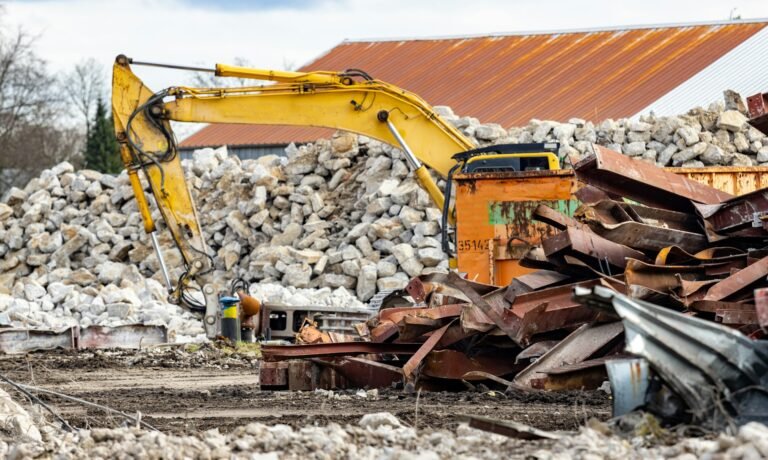
Using suitable fly ash in construction products can help divert material from disposal and create value from an industrial residue.
Fly ash bricks can also avoid the conventional kiln-firing process associated with many clay bricks.
However, the environmental performance of a brick should be evaluated across its entire life cycle, including raw-material processing, manufacturing, transportation, curing and service life.
Conservation of Topsoil
Traditional fired clay bricks generally require suitable clay or soil as a raw material.
The production of alternative masonry units such as fly ash bricks can reduce dependence on clay for brick manufacturing in appropriate circumstances.
This can help conserve valuable topsoil resources.
The actual environmental benefit depends on local manufacturing practices and material sourcing.
Thermal Properties
Fly ash bricks can provide useful thermal characteristics, but their performance depends on density, wall thickness, moisture condition and the complete wall assembly.
A building’s thermal performance is also influenced by:
- Roof construction
- Windows
- Insulation
- Building orientation
- Shading
- Ventilation
- External finishes
Therefore, fly ash bricks should be considered as one component of the overall building envelope.
Fire Resistance
Masonry materials are commonly used where fire resistance is required.
Fly ash bricks are non-combustible masonry units, but the fire-resistance rating of a wall depends on the complete wall system.
Factors such as wall thickness, density, joints, plaster and openings can influence performance.
Where a specific fire-resistance rating is required, the wall system should comply with the applicable building requirements and test data.
Applications in Residential Buildings
Fly ash bricks can be used for various masonry applications in residential construction.
They may be suitable for:
- External walls
- Internal partition walls
- Compound walls
- Utility areas
- Other approved masonry applications
The selected brick should meet the required technical specifications for its intended use.
Applications in Commercial Buildings
Commercial buildings often require large quantities of masonry materials.
The dimensional consistency of fly ash bricks can be useful for projects where repetitive wall construction is required.
They can be considered for:
- Office buildings
- Shopping complexes
- Hotels
- Educational buildings
- Institutional projects
Project-specific structural, fire, acoustic and durability requirements should be considered before selection.
Applications in Industrial Construction
Fly ash bricks can also be used in industrial buildings and facilities for suitable masonry applications.
Factories, warehouses and utility structures may require large quantities of masonry units.
The suitability of fly ash bricks depends on the exposure conditions and the required performance of the wall.
Special industrial environments may require masonry materials with specific resistance to chemicals, heat or moisture.
Use in Partition Walls
Fly ash bricks can be suitable for internal partition walls where their strength and dimensions meet the project requirements.
The wall design should consider:
- Thickness
- Weight
- Acoustic requirements
- Fire requirements
- Services
- Finishing
For lightweight partitions, other materials such as lightweight blocks or framed systems may sometimes be more appropriate.
Mortar Requirements
Proper mortar selection is essential for good masonry performance.
The mortar should be compatible with the masonry unit and should meet the requirements of the project.
Poor mortar can lead to:
- Weak joints
- Cracking
- Water penetration
- Poor adhesion
- Uneven walls
Masonry workmanship is therefore just as important as the quality of the bricks.
Curing and Storage
Fly ash bricks require proper curing during manufacturing to develop their intended properties.
After production, they should be handled and stored carefully.
Improper storage can result in damage and breakage.
Before using the bricks, construction teams should check their condition and ensure that the supplied product meets the required specifications.
Quality Testing
Quality control is important when purchasing fly ash bricks.
Depending on the applicable standards and project requirements, properties may be tested such as:
- Compressive strength
- Water absorption
- Dimensions
- Efflorescence
- Density and other relevant characteristics
Testing helps ensure that the supplied material is appropriate for the intended application.
Builders should obtain materials from reliable manufacturers and verify relevant test certificates where required.
Cost Considerations
The cost of fly ash bricks depends on location, manufacturing technology, raw-material availability, transportation and market conditions.
A proper cost comparison should include more than the purchase price.
It should consider:
- Brick cost
- Transportation
- Mortar
- Labour
- Wastage
- Plastering
- Finishing
- Long-term maintenance
A slightly higher material price can sometimes be justified if the product reduces labour, wastage or finishing requirements.
Limitations and Considerations
Fly ash bricks are not automatically the best solution for every project.
Their suitability can be affected by:
- Availability of quality products
- Transportation distance
- Manufacturing quality
- Required wall performance
- Local construction practices
- Climate
- Project specifications
Poorly manufactured bricks may not provide the expected performance.
Therefore, material selection should be based on verified product quality rather than simply choosing a brick because it is called a “fly ash brick.”
Fly Ash Bricks vs Traditional Clay Bricks
Both fly ash bricks and traditional clay bricks can be useful construction materials.
Fly ash bricks generally offer advantages such as dimensional consistency, controlled manufacturing and utilisation of an industrial by-product.
Traditional clay bricks have a long history of use and can provide good durability when properly manufactured and installed.
The right choice depends on local availability, technical requirements, cost, environmental considerations and project specifications.
There is no universal rule that one material is better for every building.
Role in Modern Construction
Modern construction increasingly focuses on resource efficiency and responsible material selection.
Fly ash bricks fit into this approach because they can transform a suitable industrial by-product into a useful construction material.
Their use can support more efficient masonry construction while contributing to the broader objective of reducing waste and conserving natural resources.
However, sustainability should always be combined with quality control, durability and engineering requirements.
Future of Fly Ash Bricks
The future of fly ash bricks will depend on continued improvement in manufacturing technology, quality control and responsible utilisation of suitable fly ash.
Automation can improve production consistency.
Better testing can improve quality assurance.
Improved mix design can help manufacturers produce masonry units with specific performance characteristics.
As construction moves toward more resource-efficient practices, fly ash-based construction products may continue to have an important role where technically and economically appropriate.
Conclusion
Fly ash bricks are an important alternative masonry material for modern construction. They can provide consistent dimensions, useful strength, controlled manufacturing, reduced material wastage and productive use of suitable industrial by-products.
Their environmental benefits can be particularly valuable when they are manufactured efficiently and transported over reasonable distances.
However, the quality of the final building depends on more than the type of brick selected. Proper manufacturing, testing, storage, mortar selection, masonry workmanship and construction supervision are all essential.
For builders, architects, civil engineers and developers, the best approach is to select fly ash bricks based on verified performance, project requirements, local availability and long-term value.
Turning Industrial By-Products into Stronger, Smarter and More Resource-Efficient Construction.
About The Author