

The science, benefits and practical principles of concrete curing
Concrete does not become strong simply because it has been poured and has started to harden. After placement, the cement continues to react chemically with water. This process, called hydration, creates the products that give concrete its strength and durability. Proper curing is therefore a critical part of concrete construction.
Water and the Hydration Process
When cement is mixed with water, hydration begins. As hydration continues, cement particles react and
form hydration products that progressively build the internal structure of hardened concrete. If moisture is
lost too quickly, hydration can slow or stop before the concrete reaches its potential. The American
Concrete Institute states that sufficient moisture and suitable temperature are necessary for the chemical
reactions on which strength development depends.
Why Curing Water Matters
The purpose of curing is not simply to make concrete wet. It is to maintain the conditions needed for continued hydration. Proper curing helps concrete develop strength, reduce permeability and improve durability. Industry guidance identifies curing as an important factor affecting strength, watertightness, abrasion resistance and resistance to environmental exposure.
Key benefits include:
- Strength development: continued hydration allows the concrete’s internal structure to develop.
- Durability: well-cured concrete can develop a denser, less permeable structure.
- Better surface quality: maintaining moisture helps reduce premature drying of exposed surfaces.
- Reduced risk of early-age cracking: controlling moisture loss helps reduce adverse volumetric
changes. - Longer service performance: adequate curing supports the development of durable concrete.
What Happens If Concrete Dries Too Quickly?
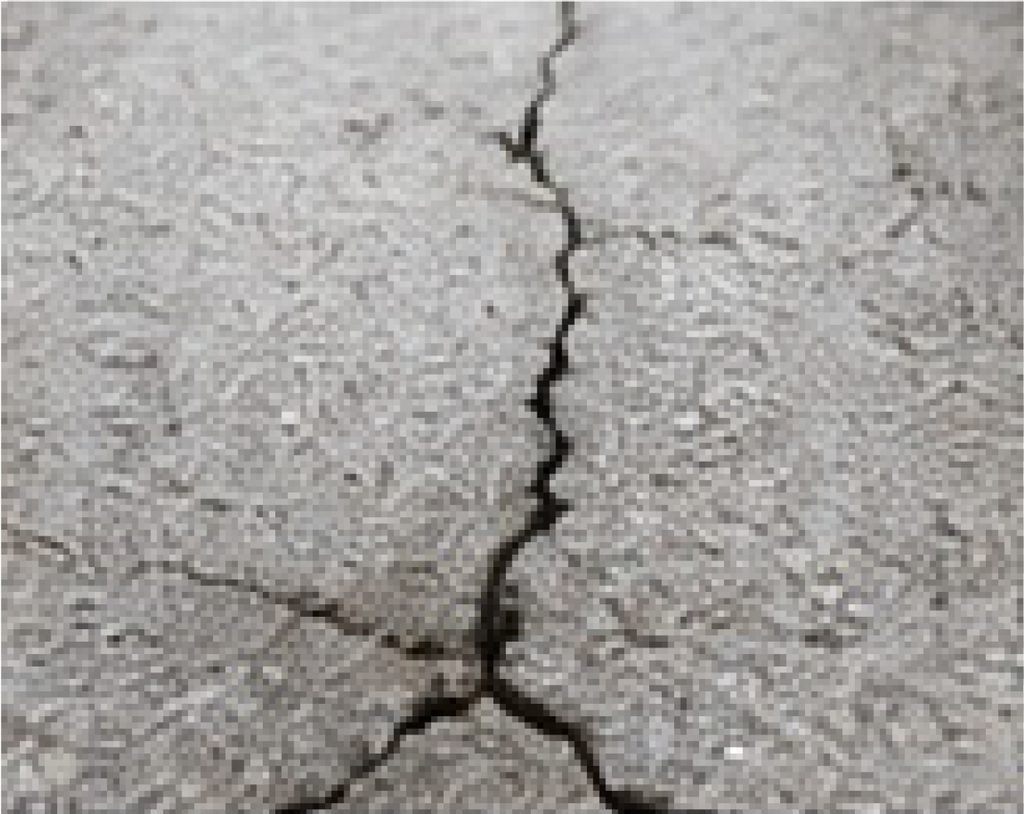
Rapid moisture loss can prevent concrete from achieving the full benefit of hydration. The result can be a
less mature surface and reduced performance. A practical curing strategy therefore focuses on limiting
evaporation and maintaining appropriate moisture and temperature conditions during the early stages.
A crucial distinction: curing water is not the same as adding extra water to the concrete mix. Water used
for curing is applied after the concrete surface is sufficiently hardened to resist damage; its purpose is to
maintain moisture, not to change the designed mix.
Water and the Hydration Process
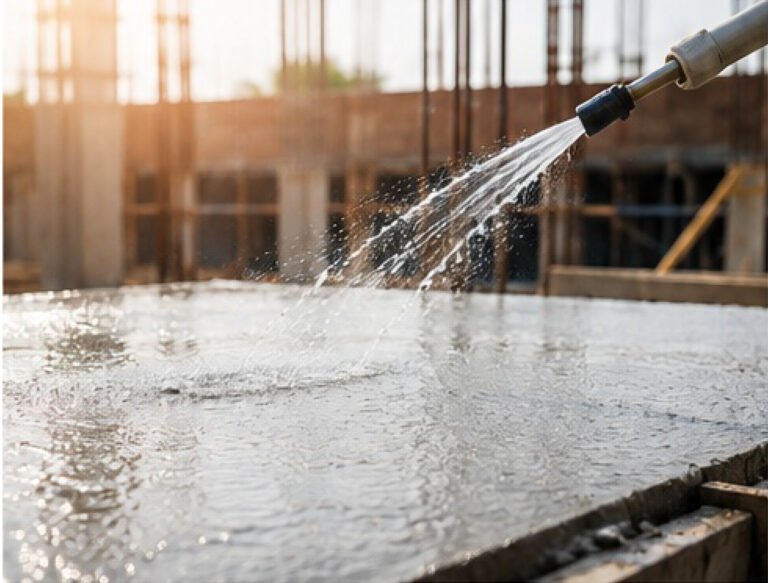
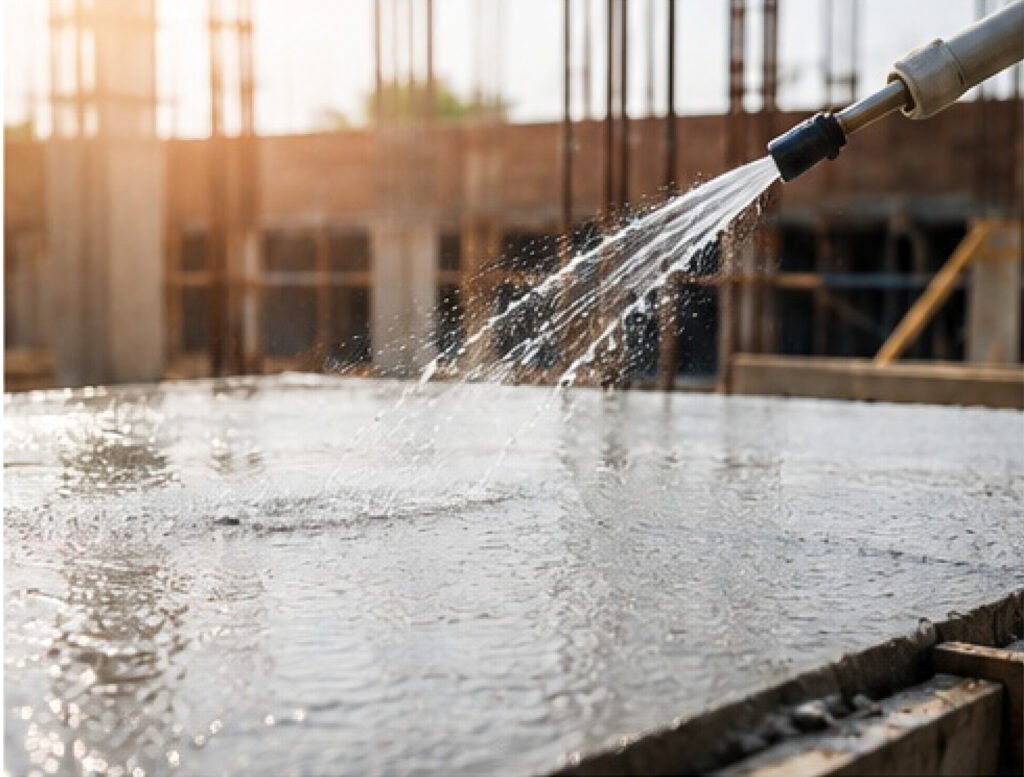
- Water curing: Sprinkling, fogging, ponding or other controlled water-curing methods can maintain moisture at the surface.
- Wet coverings: Wet burlap, cotton mats and similar materials can help retain moisture over exposed surfaces.
- Moisture-retaining covers: Plastic sheets or other suitable coverings can reduce evaporation when properly installed and secured.
- Curing compounds: Membrane-forming curing compounds can reduce water loss by forming a protective film. Their suitability depends on the project and finishing system.
Practical Site Considerations
Curing should be planned before concrete is placed. The selected method should account for weather, wind, temperature, exposed surface, concrete type, project specifications and the availability of water or curing materials. In hot or cold conditions, additional temperature and moisture-control measures may be required.
For slabs and other exposed surfaces, aim for consistent curing across the entire area. Avoid practices
that can damage the surface or cause uncontrolled water movement. Always follow the project’s concrete
specification and the engineer’s instructions where they are more specific than general guidance.
A Simple Curing Checklist
Prepare the curing method before placement is complete.
- Protect the surface from excessive evaporation and premature drying.
- Begin curing when the surface can receive the chosen method without being damaged.
- Maintain appropriate moisture and temperature conditions for the specified curing period.
- Give special attention to hot, dry, windy or cold weather.
- Follow project specifications, applicable standards and the engineer’s recommendations.
Conclusion
Water is essential to concrete long before and long after pouring. During mixing, water participates in the
hydration reaction that makes cement harden. After placement, maintaining suitable moisture allows
hydration to continue and helps the concrete develop its intended strength and durability. Proper curing is
therefore not an optional finishing step—it is an essential part of quality concrete construction.
Decoresite.com covers architecture, construction, interior design, building materials, property
development and practical knowledge for homeowners, builders, developers, architects and civil
engineers.
Technical references: American Concrete Institute (ACI); American Cement Association; Portland Cement Association; U.S. Federal Highway Administration guidance on concrete curing and hydration.
About The Author