

Construction is one of the largest users of raw materials, while building, renovation, and demolition activities generate significant quantities of waste. Instead of treating concrete, bricks, metals, timber, and other materials as waste, many of them can be recovered, processed, and used again in construction.
Recycling construction materials supports a more circular approach to building. Properly processed construction and demolition waste can be used in applications such as recycled aggregates, concrete products, road construction, blocks, pavers, and landscaping. (MDPI)
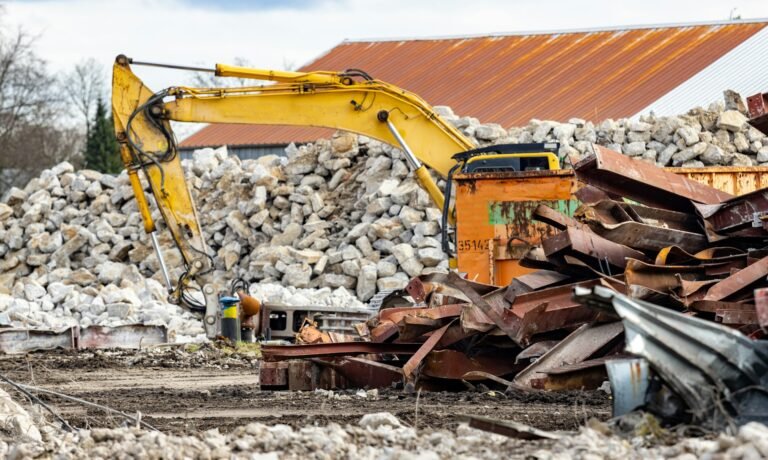
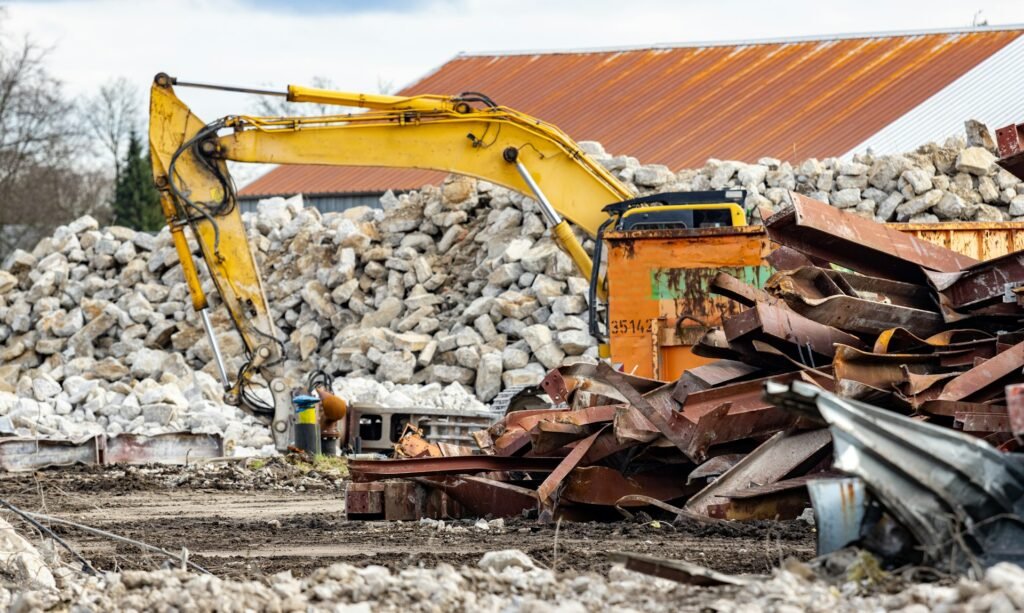
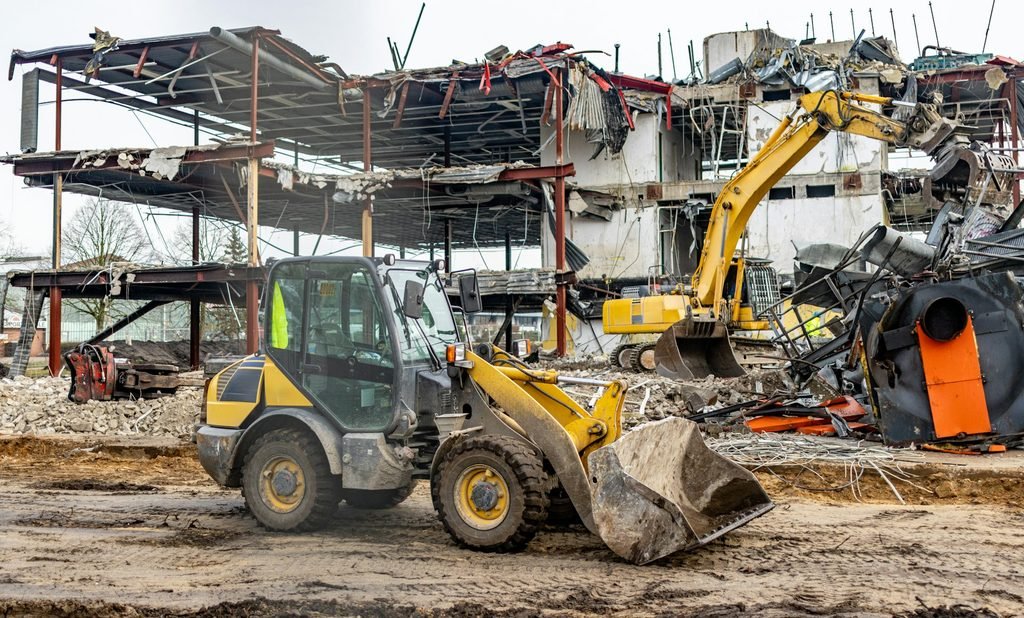
Real photograph: construction and demolition waste being processed for recycling.
What Are Recycled Construction Materials?
Recycled construction materials are materials recovered from construction, renovation, demolition, manufacturing, or other sources and processed for reuse in new construction.
Common examples include:
- Recycled concrete
- Recycled bricks and masonry
- Recycled steel
- Reclaimed timber
- Recycled glass
- Recycled asphalt
- Recycled aggregates
- Reused construction components
The suitability of a recycled material depends on its quality, contamination, processing method, engineering properties, and intended application.
Recycled Concrete and Aggregates
Concrete and masonry waste can be crushed, sorted, and screened to produce recycled aggregate. These aggregates can be used in selected construction and civil engineering applications, including road works and some concrete products. (Central PH & Environmental Engineering)
Recycled aggregate can reduce the requirement for newly quarried natural aggregate. However, recycled aggregate is not automatically suitable for every structural application. Its properties, including particle size, water absorption, strength, contamination, and durability, need to be evaluated before use. Research has shown that the appropriate replacement level depends on the application and mix design. (ScienceDirect)
Recycled Bricks and Masonry
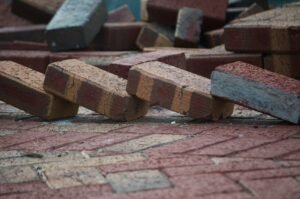
Bricks recovered from demolished buildings can sometimes be cleaned, sorted, and reused directly. Damaged masonry can also be processed for use as aggregate or in other suitable construction products.
Reusing existing bricks can preserve material that would otherwise become demolition waste. Before reuse, bricks should be checked for cracks, deterioration, contamination, strength, and suitability for the proposed application.
Recycled Steel
Steel is another important material with strong recycling potential. Structural steel, reinforcement bars, roofing components, doors, frames, and other steel products can be recovered and recycled.
Because steel can be recycled into new steel products, construction projects can incorporate recycled steel while maintaining the required engineering performance when the appropriate grades and specifications are selected.
Reclaimed Timber
Timber from old buildings can sometimes be carefully dismantled, inspected, repaired, and reused. Reclaimed wood can be used for structural elements where appropriate, as well as flooring, doors, furniture, wall panels, ceilings, and decorative features.
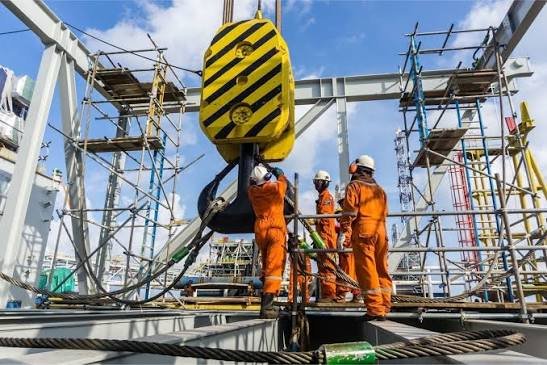
Real photograph: reclaimed timber being incorporated into a new construction project.
Reusing timber can give a building a distinctive appearance while extending the useful life of an existing material.
Recycled Materials in Roads and Infrastructure
Recycled construction materials are not limited to buildings. Recycled aggregates can also be used in selected road and pavement applications.
For example, research in India has investigated recycled aggregates produced from construction and demolition waste for use as road pavement sub-base material, with engineering tests used to assess properties such as crushing resistance, abrasion, water absorption, and particle-size distribution. (Frontiers)
This demonstrates how construction waste can become a useful resource for infrastructure rather than simply being transported to disposal sites.
Recycled Materials for Blocks and Pavers
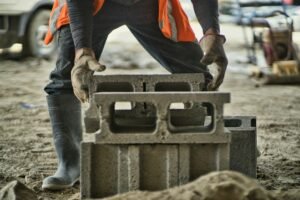
Processed construction and demolition waste can be used to manufacture products such as:
- Concrete blocks
- Hollow blocks
- Pavers
- Kerb stones
- Tiles
- Wall products
- Drain covers
- Landscaping products
Indian guidance on recycled C&D waste identifies recycled aggregates and other processed materials as potential raw materials for such products. (Niti For States)
Benefits of Using Recycled Materials
Using recycled materials can provide several potential benefits:
1. Reducing Construction Waste
Recovering usable materials reduces the quantity of construction and demolition waste sent for disposal.
2. Conserving Natural Resources
Recycled aggregates and other recovered materials can reduce demand for newly extracted resources.
3. Supporting Sustainable Construction
Material recovery and reuse contribute to a more circular construction industry.
4. Reducing Transportation and Disposal
When suitable recycling facilities are available close to construction or demolition sites, waste can potentially be processed locally and returned to productive use.
5. Creating New Construction Products
Waste concrete, bricks, and other materials can become aggregates, blocks, pavers, and other useful products.
Challenges of Recycled Materials
Recycling construction materials also presents challenges. Construction and demolition waste is often mixed and may contain unwanted materials such as plastics, soil, wood, plaster, or other contaminants. Effective sorting and processing are therefore essential. (PubMed Central (PMC))
Quality can also vary depending on the source of the waste. Recycled aggregates may have different physical properties from natural aggregates, and these differences can influence concrete workability, strength, and durability. (ScienceDirect)
For this reason, recycled materials should be tested and used according to applicable engineering specifications and standards.
Role of Civil Engineers and Architects
Civil engineers play an important role in determining where recycled materials can safely and effectively be used. They evaluate structural requirements, material properties, durability, construction methods, and quality-control requirements.
Architects can incorporate reclaimed and recycled materials into building designs while considering appearance, functionality, environmental performance, and maintenance.
Contractors are responsible for proper handling, segregation, storage, installation, and quality control during construction.
The Future of Recycled Construction
The future of construction is increasingly moving toward a circular model in which materials are designed, constructed, recovered, and reused rather than discarded after one use.
Digital documentation, better demolition practices, improved recycling facilities, material testing, prefabrication, and design-for-disassembly can help increase the recovery of valuable construction materials.
The objective is not to recycle every material regardless of its quality. Instead, the goal is to recover suitable materials, verify their performance, and use them where they provide genuine technical and environmental value.
Conclusion
Recycled materials can play an important role in sustainable construction. Concrete, bricks, steel, timber, and other construction materials can often be recovered, processed, reused, or recycled into new products.
However, successful recycling requires proper segregation, processing, testing, engineering design, and quality control. When these processes are carefully managed, construction waste can be transformed from a disposal problem into a valuable resource.
Recycle Materials. Reduce Waste. Build Responsibly.
About The Author