


Introduction
The construction industry is changing rapidly. Traditional construction methods remain important, but modern technologies are helping architects, engineers, builders and developers improve the way buildings are designed and constructed.
Today, construction projects increasingly use Building Information Modelling (BIM), prefabrication, modular construction, advanced concrete technology, drones, 3D printing, digital surveying and artificial intelligence.
These technologies can improve productivity, accuracy, safety, quality control and project management when they are properly selected and implemented.
Modern construction is therefore not simply about building faster. It is about building better, safer and more efficiently.
1. What Is Modern Construction Technology?
Modern construction technology refers to new materials, equipment, digital systems and construction methods that improve traditional building processes.
It can be applied to:
- Residential buildings
- Commercial complexes
- High-rise buildings
- Industrial structures
- Roads and bridges
- Airports
- Hospitals
- Educational institutions
- Infrastructure projects
The technology selected depends on the project’s size, budget, location, design and technical requirements.
2. Building Information Modelling
Building Information Modelling (BIM) is one of the most important digital developments in construction.
BIM creates a digital representation of a building and can integrate information from different disciplines.
Architectural, structural and building-services information can be coordinated within the project environment.
BIM can help identify certain conflicts before construction begins.
For example, an electrical or plumbing service may appear to pass through a structural beam in a coordinated digital model. The issue can potentially be identified and resolved before workers reach that stage on site.
This can reduce rework and improve coordination.
3. 3D Building Design
Traditional drawings are increasingly supplemented by three-dimensional digital models.
A 3D model can help project teams visualise:
- Building shape
- Interior spaces
- Structural components
- Service routes
- Equipment
- Materials
- Construction sequences
Three-dimensional visualisation can also help clients understand the proposed building before construction begins.
4. Prefabricated Construction
Prefabrication involves manufacturing components in a controlled facility before transporting them to the construction site.
Examples include:
- Reinforcement cages
- Wall panels
- Floor elements
- Staircases
- Bathroom modules
- Structural components
- Building-service assemblies
Factory production can provide better control over certain aspects of quality and reduce some site activities.
It can also help reduce material waste and improve construction speed when properly planned.
5. Modular Construction
Modular construction takes prefabrication further by producing larger sections or modules of a building in a controlled environment.
Completed or partially completed modules can then be transported to the project site and assembled.
This approach can be useful for certain:
- Residential projects
- Hotels
- Worker accommodation
- Healthcare facilities
- Offices
- Educational buildings
However, transportation, site access, module size and project design must be considered carefully.
6. 3D Printing in Construction
3D printing technology is being explored for construction applications.
Large-scale printers can deposit suitable construction materials layer by layer to create walls or other components.
Potential advantages include:
- Reduced material waste
- Automated production
- Complex geometries
- Reduced manual work for certain tasks
- Faster construction for suitable applications
However, large-scale 3D-printed construction still has technical, regulatory and practical limitations.
It should therefore be viewed as an emerging technology rather than a universal replacement for conventional construction.
7. Drones on Construction Sites
Drones can provide aerial views of construction sites.
They can be used for:
- Progress monitoring
- Site photography
- Surveying support
- Stockpile measurement
- Inspection
- Documentation
A drone can capture information from areas that may be difficult or time-consuming to inspect from the ground.
However, drone operations must comply with applicable aviation and site-safety requirements.
8. Digital Surveying
Modern surveying equipment can improve the accuracy and efficiency of construction setting out.
Technologies such as:
- Total stations
- GNSS/GPS systems
- Laser scanners
- Digital levels
can help surveyors establish building positions, levels and dimensions.
Accurate surveying is particularly important for large projects where small errors can become significant over long distances.
9. Laser Scanning
Laser scanning can capture detailed information about existing buildings and construction sites.
A scanner can collect large amounts of spatial data and create a digital representation of the surveyed environment.
This can be useful for:
- Renovation projects
- Heritage buildings
- As-built documentation
- Structural surveys
- BIM development
- Construction verification
Laser scanning can reduce the need for repeated manual measurements in certain applications.
10. Artificial Intelligence in Construction
Artificial intelligence is becoming increasingly relevant to the construction industry.
AI systems can potentially assist with:
- Schedule analysis
- Risk identification
- Document processing
- Cost estimation
- Progress monitoring
- Design coordination
- Safety analysis
- Predictive maintenance
AI should be used as a supporting technology. Engineering decisions, safety-critical assessments and regulatory compliance still require qualified professionals and appropriate verification.
11. Robotics in Construction
Robotic systems are being developed for specific construction tasks.
Potential applications include:
- Bricklaying
- Concrete finishing
- Drilling
- Surveying
- Material handling
- Inspection
Robots can potentially perform repetitive or hazardous tasks while improving consistency.
However, their practical use depends on project conditions, cost, site layout and available technology.
12. Advanced Concrete Technology
Concrete technology is also developing.
Modern concrete systems can be designed for specific requirements such as:
- High strength
- Improved durability
- Reduced permeability
- Better workability
- Faster strength development
- Lower environmental impact
Examples include high-performance concrete, self-compacting concrete and concretes incorporating supplementary cementitious materials.
The appropriate mixture must be selected according to structural and durability requirements.
13. Self-Compacting Concrete
Self-compacting concrete is designed to flow and consolidate under its own weight without conventional mechanical vibration under suitable conditions.
It can be useful in structures with:
- Congested reinforcement
- Complex shapes
- Difficult-to-access areas
The use of self-compacting concrete can improve placement in suitable applications.
However, its mix design, handling and quality control require appropriate expertise.
14. Advanced Formwork Systems
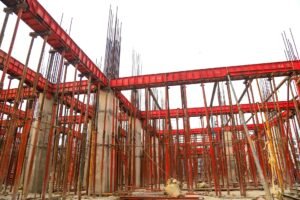
Traditional timber formwork is increasingly supplemented or replaced by engineered formwork systems in many projects.
Modern systems may include:
- Steel formwork
- Aluminium formwork
- Tunnel formwork
- Climbing formwork
- Modular formwork
These systems can improve dimensional consistency and construction speed when used appropriately.
High-rise projects can particularly benefit from carefully planned repetitive formwork systems.
15. Digital Project Management
Construction projects generate large amounts of information.
Digital project-management systems can help teams manage:
- Drawings
- Documents
- Inspections
- Work schedules
- Material records
- Site reports
- Requests for information
- Approvals
Centralised information can improve communication between project participants.
It can also reduce the risk of workers using outdated drawings.
16. Virtual and Augmented Reality
Virtual reality can allow project teams and clients to experience a digital building before it is constructed.
Augmented reality can overlay digital information onto the physical environment.
Potential applications include:
- Design review
- Worker training
- Installation guidance
- Site coordination
- Client presentations
- Safety training
These technologies can improve understanding of complex spaces.
17. Prefabricated MEP Systems
Mechanical, electrical and plumbing systems can also benefit from prefabrication.
Service assemblies can be manufactured and tested before being delivered to the site.
This can reduce installation time and improve coordination.
For example, a preassembled service module may contain multiple coordinated components that would otherwise need to be installed separately on site.
18. Smart Buildings
Modern construction increasingly incorporates smart-building systems.
These can include:
- Automated lighting
- Building-management systems
- Smart security
- Energy monitoring
- Automated temperature control
- Occupancy sensors
- Digital access systems
Smart technologies can improve building operation and energy management when properly designed and maintained.
19. Energy-Efficient Construction
Modern construction increasingly focuses on reducing energy consumption.
Energy-efficient buildings may use:
- Better insulation
- High-performance glazing
- External shading
- Efficient lighting
- Efficient HVAC systems
- Renewable energy
- Smart controls
- Natural ventilation
Building orientation and architectural design also influence energy performance.
Energy efficiency should ideally be considered during the early design stage rather than added after construction.
20. Sustainable Construction Materials
Modern construction is also exploring materials with lower environmental impact.
Examples include:
- Recycled materials
- Supplementary cementitious materials
- Reclaimed materials
- Engineered timber
- Low-impact finishes
- Recycled aggregates where suitable
Material selection should consider structural performance, durability, availability, cost and environmental impact.
21. Construction Safety Technology
Technology can help improve safety.
Examples include:
- Wearable devices
- Digital safety inspections
- Site cameras
- Drone monitoring
- Proximity detection
- Digital permits
- Virtual safety training
These systems can help identify hazards and improve communication.
However, technology should complement established safety procedures rather than replace them.
22. Technology for Quality Control
Digital tools can improve quality inspection.
Site teams can record:
- Concrete inspections
- Reinforcement checks
- Waterproofing inspections
- Material deliveries
- Defects
- Progress photographs
- Testing results
Digital records can make it easier to track issues and confirm when corrective actions have been completed.
23. Benefits of Modern Construction Technology
When properly implemented, modern technology can provide several benefits.
Faster Construction
Prefabrication, modular construction and advanced equipment can reduce certain construction activities.
Improved Accuracy
Digital surveying and modelling can reduce certain measurement and coordination errors.
Better Quality Control
Factory production and digital inspection systems can improve consistency.
Reduced Waste
Better planning and prefabrication can reduce material waste.
Improved Safety
Automation and remote monitoring can reduce exposure to certain hazards.
Better Communication
Digital project platforms can connect different project teams.
24. Challenges of Modern Construction Technology
Modern technology also has challenges.
Initial Investment
Advanced equipment and software can require significant investment.
Skilled Workforce
Workers and professionals may need specialised training.
Integration Problems
Different digital systems may not always work together easily.
Site Conditions
Technology designed for controlled environments may not always perform well on difficult construction sites.
Maintenance
Digital and automated systems require ongoing technical support.
Regulatory Requirements
New construction technologies may need to meet existing building codes and approval requirements.
25. The Future of Construction
The construction industry is moving toward greater digitalisation and automation.
Future projects may increasingly combine:
- BIM
- Artificial intelligence
- Robotics
- Prefabrication
- Digital twins
- Advanced materials
- Automated surveying
- Smart-building systems
- Sustainable construction techniques
The goal will not simply be to replace workers with machines.
Instead, successful construction will increasingly involve people working with technology to improve productivity, safety, quality and decision-making.
Conclusion
Modern construction technology is transforming the way buildings are planned, designed, constructed and operated.
From BIM and digital surveying to prefabrication, artificial intelligence, robotics and advanced concrete, new technologies are providing construction professionals with better tools for solving traditional problems.
However, technology alone cannot guarantee a successful project. Good engineering, proper planning, skilled workmanship, quality materials, effective supervision and safety remain essential.
The future of construction will therefore depend on combining engineering knowledge, human expertise and modern technology.
Build Smarter. Build Safer. Build for the Future.
About The Author