

Introduction
The construction industry plays a major role in shaping cities, communities and economies. Buildings provide homes, workplaces, schools, hospitals and commercial spaces, but construction and building operation also consume significant amounts of materials, energy and water.
Sustainable construction aims to reduce environmental impact while maintaining safety, functionality, durability and economic value.
It is not simply about using environmentally friendly materials. Sustainable construction considers the entire life of a building—from site selection and design to construction, operation, maintenance and eventual renovation or demolition.
The objective is simple:
Build structures that meet today’s needs without unnecessarily compromising the needs of future generations.
1. What Is Sustainable Construction?
Sustainable construction is an approach to planning, designing and constructing buildings and infrastructure in ways that reduce environmental impact while providing long-term social and economic benefits.
It considers three major areas:
Environmental Sustainability
Reducing energy use, waste, pollution, water consumption and resource depletion.
Economic Sustainability
Creating buildings that provide value throughout their service life while controlling construction and operating costs.
Social Sustainability
Creating safe, healthy, accessible and comfortable spaces for people.
A truly sustainable building should balance all three.
2. Why Sustainable Construction Is Important
Rapid urbanisation is increasing demand for housing, offices, roads and infrastructure.
At the same time, cities face challenges such as:
- Increasing energy demand
- Water shortages
- Construction waste
- Air pollution
- Urban heat
- Loss of natural areas
- Rising operating costs
Sustainable construction can help address some of these challenges through better planning and resource efficiency.
3. Sustainable Site Selection
Sustainability begins before construction starts.
The location of a building can influence its environmental impact throughout its life.
Important considerations can include:
- Access to public transport
- Existing infrastructure
- Local climate
- Natural drainage
- Flood risk
- Soil conditions
- Existing vegetation
- Access to essential services
Developing suitable areas efficiently can reduce the need for unnecessary infrastructure expansion.
4. Climate-Responsive Building Design
A building should respond to the climate in which it is located.
In warm climates, architects may consider:
- Building orientation
- Shading
- Natural ventilation
- Roof insulation
- Appropriate window design
- Solar control
In cooler climates, insulation and controlled solar heat gain may become more important.
Climate-responsive design can reduce dependence on mechanical heating and cooling.
5. Energy-Efficient Buildings
One of the major goals of sustainable construction is reducing energy consumption.
Energy-efficient buildings may incorporate:
- LED lighting
- Efficient air-conditioning systems
- High-performance glazing
- Insulation
- Energy-efficient appliances
- Smart controls
- Natural daylight
- Natural ventilation
Reducing energy demand can lower operating costs and reduce associated environmental impacts.
6. Renewable Energy
Renewable energy can be incorporated into suitable buildings.
Solar photovoltaic panels are one of the most common examples.
Solar energy can be used to generate electricity for:
- Lighting
- Appliances
- Building services
- Common-area equipment
Solar water-heating systems may also be suitable for some buildings.
The feasibility of renewable energy depends on factors such as available roof area, orientation, shading, local climate and energy demand.
7. Sustainable Building Materials
Material selection is an important part of sustainable construction.
Builders can consider:
- Locally available materials
- Recycled materials
- Reclaimed materials
- Durable products
- Materials with lower environmental impacts
- Materials with responsible sourcing
However, a material should not be considered sustainable simply because it is labelled “green.”
Its durability, transportation, maintenance requirements, manufacturing process and end-of-life options should also be considered.
8. Sustainable Concrete
Concrete is one of the most widely used construction materials, so improving its environmental performance can have significant benefits.
Depending on the project, concrete may incorporate supplementary cementitious materials or other strategies to reduce the amount of conventional cement required.
Good structural design can also reduce unnecessary concrete consumption.
The objective is to achieve the required strength, durability and service life while using resources efficiently.
9. Fly Ash and Other Supplementary Materials
Certain supplementary cementitious materials can partially replace conventional cement in appropriate concrete mixtures.
Fly ash, slag and other materials may be used depending on availability, specifications and required performance.
These materials can contribute to resource efficiency and may reduce the environmental impact associated with cement production.
Their use must follow applicable standards and concrete mix requirements.
10. Water Conservation
Water is an important resource in both construction and building operation.
Sustainable buildings can incorporate water-saving strategies such as:
- Low-flow fixtures
- Efficient taps
- Dual-flush toilets
- Rainwater harvesting
- Water-efficient landscaping
- Leak detection
- Greywater reuse where appropriate
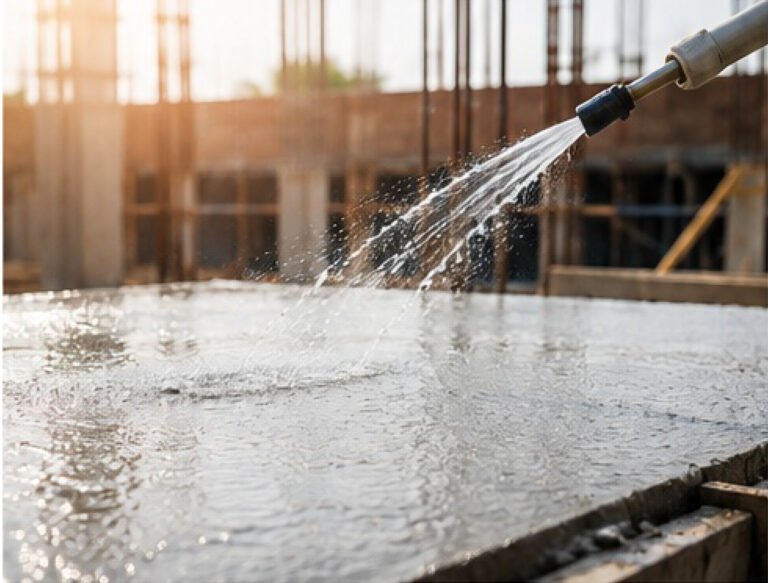
Construction sites can also implement measures to reduce unnecessary water consumption.
11. Rainwater Harvesting
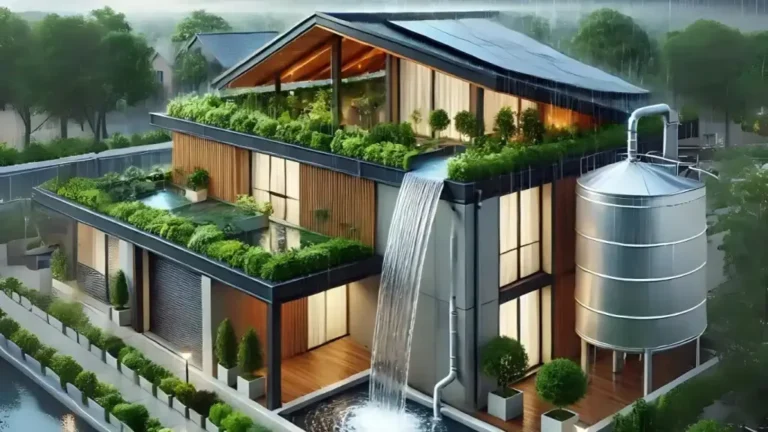
Rainwater harvesting involves collecting and managing rainwater for suitable uses.
A typical system may include:
- Roof collection
- Gutters and downpipes
- Filtration
- Storage
- Distribution or recharge system
Depending on local regulations and water quality, harvested rainwater may be used for applications such as landscape irrigation or other non-potable purposes.
Proper design and maintenance are essential.
12. Waste Reduction During Construction
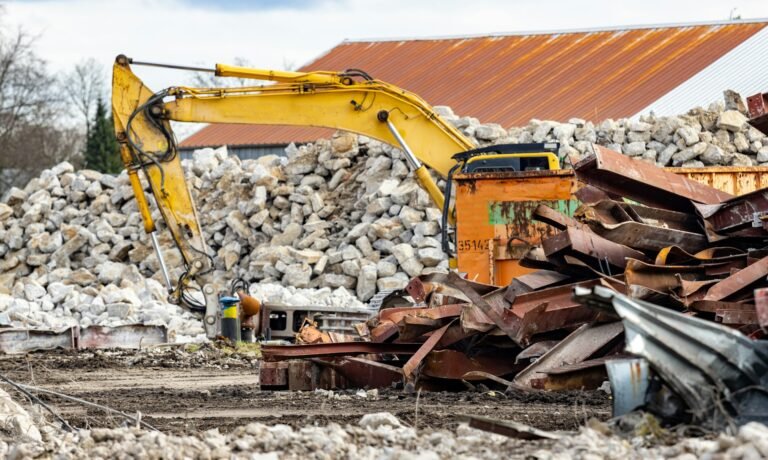
Construction generates various types of waste, including:
- Concrete
- Bricks and blocks
- Steel
- Timber
- Packaging
- Plasterboard
- Excavated material
Waste can be reduced through:
- Accurate quantity estimation
- Better material storage
- Prefabrication
- Reuse
- Recycling
- Proper segregation
The best approach is to prevent waste before it is generated.
13. Reuse and Recycling
Some construction materials can be reused or recycled.
For example:
- Steel can be recycled.
- Certain aggregates can be reused where technically suitable.
- Timber may be reused.
- Bricks may sometimes be salvaged.
- Packaging materials can be segregated for recycling.
Recycling should be carried out through appropriate systems, and materials should meet the technical requirements for their intended reuse.
14. Green Roofs
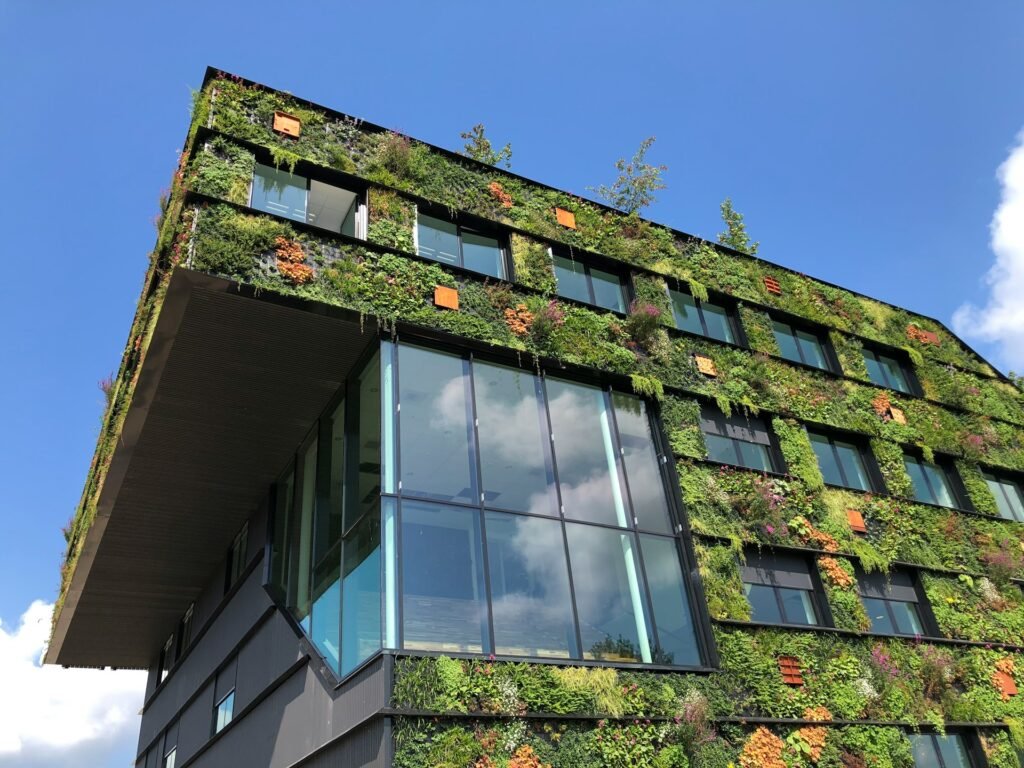
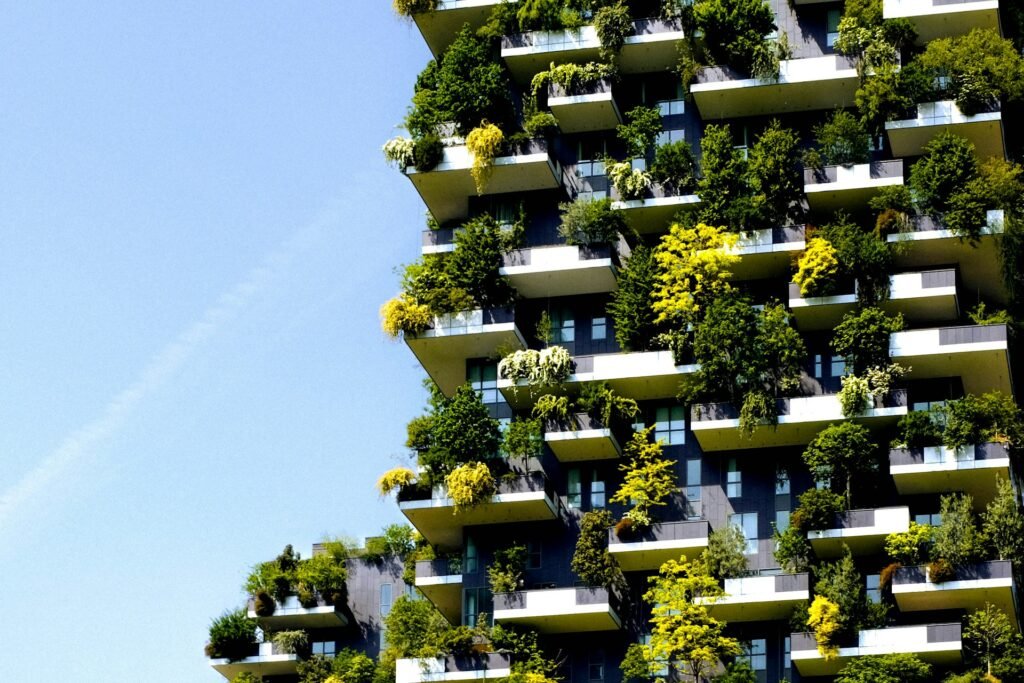
Green roofs incorporate vegetation into roof systems.
They can provide several potential benefits, including:
- Reducing roof surface temperatures
- Managing some stormwater
- Providing vegetation in dense urban areas
- Improving the visual environment
However, green roofs require appropriate structural capacity, drainage, waterproofing and maintenance.
They should be designed as complete roof systems rather than simply placing soil and plants on a roof.
15. Natural Lighting
Natural daylight can reduce the need for artificial lighting during suitable periods.
Architects can improve daylight access through:
- Window placement
- Building orientation
- Skylights
- Light shelves
- Internal layouts
- Reflective surfaces
However, excessive glazing can increase solar heat gain in some climates.
Therefore, daylight design should be balanced with thermal performance.
16. Natural Ventilation
Natural ventilation can improve indoor air movement and may reduce mechanical cooling requirements under suitable climatic conditions.
Design strategies can include:
- Cross ventilation
- Operable windows
- Ventilation openings
- Courtyards
- Building orientation
Natural ventilation must be designed carefully to maintain indoor comfort and acceptable air quality.
17. Insulation and Building Envelope
The building envelope separates indoor spaces from the external environment.
Good insulation and appropriate envelope design can reduce unwanted heat transfer.
Important components include:
- Walls
- Roofs
- Windows
- Doors
- Shading systems
- Air barriers where appropriate
A well-designed envelope can improve thermal comfort and reduce energy demand.
18. Sustainable Landscaping
Landscaping can also contribute to sustainability.
Suitable landscape design may include:
- Native or climate-appropriate plants
- Efficient irrigation
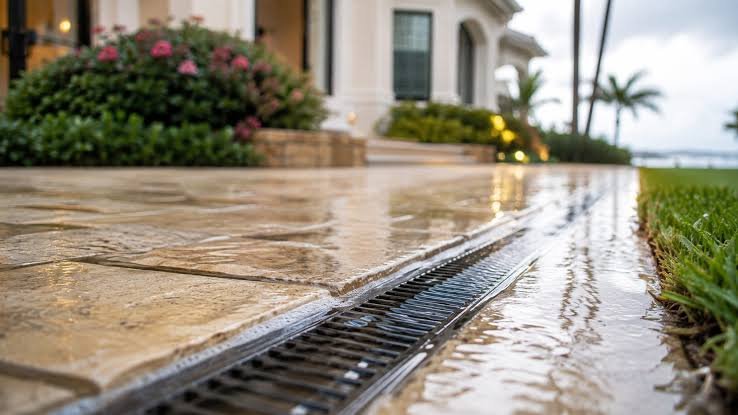
- Permeable surfaces
- Rainwater management
- Shade trees
- Reduced lawn areas where appropriate
Vegetation can provide shade and improve the outdoor environment.
19. Sustainable Urban Development
Sustainable construction extends beyond individual buildings.
Cities can improve sustainability through:
- Public transport
- Walkable neighbourhoods
- Cycling infrastructure
- Mixed-use development
- Efficient water systems
- Green spaces
- Waste management
- Renewable energy
Good urban planning can reduce travel distances and improve access to essential services.
20. Smart Buildings
Technology can improve the sustainability of building operations.
Smart systems can monitor:
- Energy consumption
- Water consumption
- Indoor temperature
- Lighting
- Occupancy
- Equipment performance
Automated controls can adjust systems according to building use.
This can reduce unnecessary energy and resource consumption.
21. Sustainable Construction and Indoor Health
A sustainable building should also provide a healthy environment for occupants.
Important considerations include:
- Ventilation
- Daylight
- Thermal comfort
- Moisture control
- Low-emission materials
- Acoustic comfort
- Indoor air quality
Environmental sustainability should therefore be combined with human health and comfort.
22. Durability Is Part of Sustainability
A building that requires frequent replacement and repair can consume more resources over its lifetime.
Therefore, durability is an important part of sustainable construction.
Using suitable materials, proper waterproofing, adequate structural design and good workmanship can increase service life.
A durable building is often a more resource-efficient building.
23. Life-Cycle Thinking
Sustainable construction should consider the entire life of a building.
A building has several stages:
Design → Construction → Operation → Maintenance → Renovation → End of Life
A decision that appears inexpensive during construction may result in higher energy or maintenance costs later.
Life-cycle thinking helps project teams consider long-term performance rather than focusing only on initial construction cost.
24. Challenges of Sustainable Construction
Sustainable construction also has challenges.
Initial Cost
Some technologies can require higher upfront investment.
Availability
Certain sustainable materials may not be readily available in every region.
Skilled Labour
Some systems require specialised installation skills.
Maintenance
Green technologies need appropriate maintenance to perform effectively.
Misleading Claims
Not every product labelled “eco-friendly” provides significant environmental benefits.
Therefore, sustainability decisions should be based on reliable technical information and life-cycle considerations.
25. The Future of Sustainable Construction
The future of construction is likely to combine sustainability with digital technology.
Emerging approaches include:
- Low-carbon concrete
- Mass timber construction where appropriate
- Modular construction
- Building energy modelling
- Smart energy systems
- Digital twins
- Artificial intelligence
- Renewable energy integration
- Circular construction
- Advanced recycling
The objective will be to create buildings that consume fewer resources while providing better performance and comfort.
Conclusion
Sustainable construction is becoming increasingly important as cities grow and environmental pressures increase.
It involves much more than installing solar panels or using a few recycled materials. True sustainability requires a whole-building approach that considers site selection, design, materials, energy, water, waste, construction methods, indoor environment, durability and long-term maintenance.
The most successful sustainable buildings are not only environmentally responsible. They are also safe, comfortable, economical, durable and practical.
The construction industry has an important role in creating the cities of tomorrow. By combining good engineering, responsible material selection, efficient technology and thoughtful design, buildings can provide long-term value while reducing their impact on the environment.
Build Today. Conserve Tomorrow. Create a Sustainable Future.
About The Author