

Introduction
Masonry walls are an important part of many buildings. They provide enclosure, separation between spaces, protection from weather and, depending on the structural system, may also contribute to the building’s structural performance.
Two commonly used masonry materials are bricks and concrete blocks. Both have been used extensively in residential, commercial and institutional construction, but they differ in size, weight, thermal behaviour, installation methods, strength characteristics, availability and cost.
The question is not simply whether bricks or concrete blocks are universally better. The more useful question is:
Which material is more suitable for a particular building, location and construction requirement?
1. What Are Bricks?
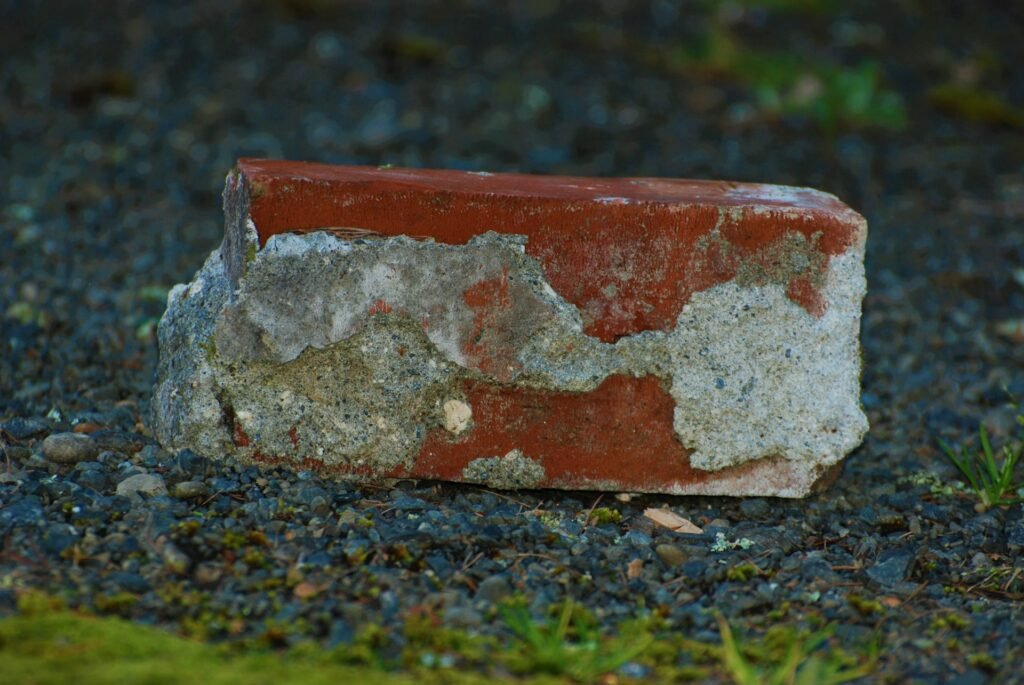
Bricks are masonry units traditionally manufactured from clay or other suitable mineral materials and fired in a kiln. Modern bricks can vary considerably in composition, manufacturing process, dimensions and performance.
Common types include:
- Burnt clay bricks
- Facing bricks
- Engineering bricks
- Perforated bricks
- Hollow bricks
- Special-purpose bricks
The properties of a brick depend on its raw materials, manufacturing process and quality control.
2. What Are Concrete Blocks?
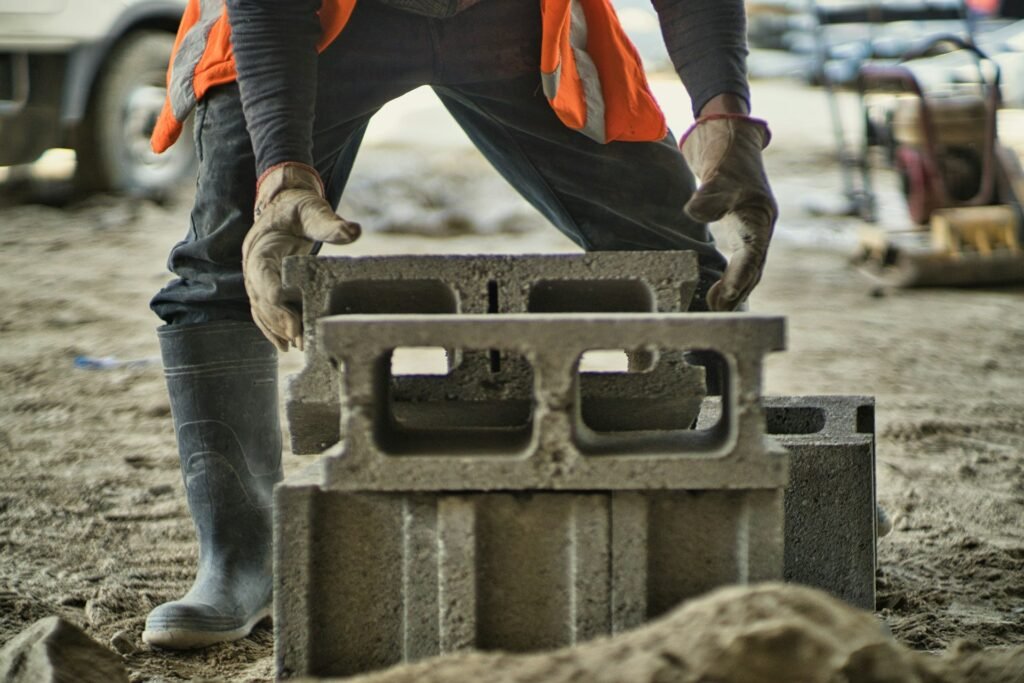
Concrete blocks are masonry units manufactured using cementitious materials, aggregates and water. They can be produced as solid or hollow units.
Depending on their composition and manufacturing process, concrete blocks can have different densities and performance characteristics.
Common categories include:
- Solid concrete blocks
- Hollow concrete blocks
- Lightweight concrete blocks
- Aerated concrete masonry units
Their size and shape can vary according to local standards and construction practices.
3. Size and Construction Speed
One major difference is the size of the masonry units.
A typical concrete block is substantially larger than a conventional brick. Therefore, fewer units may be required to construct the same wall area.
This can potentially reduce:
- Number of masonry joints
- Handling of individual units
- Mortar joints
- Installation time
However, actual construction speed depends on the block type, wall design, labour skills, openings and site conditions.
4. Weight of the Wall
Wall weight is an important consideration in building design.
Conventional clay bricks can produce relatively heavy masonry walls.
Hollow or lightweight concrete blocks can sometimes reduce wall weight compared with solid masonry.
Reducing unnecessary dead load can potentially influence structural design, particularly in multi-storey buildings.
However, the actual wall weight must be calculated from the selected masonry unit and wall thickness rather than assumed from the material name alone.
5. Strength
Strength is often one of the first factors considered when selecting masonry.
Both bricks and concrete blocks are available in different strength grades.
The required strength depends on:
- Building height
- Wall function
- Structural system
- Loads
- Exposure conditions
- Applicable standards
A high-quality brick is not automatically stronger than a concrete block, and a concrete block is not automatically stronger than a brick.
The specific product specification matters more than the general category.
6. Thermal Performance
Walls influence the temperature of interior spaces.
Some bricks provide useful thermal mass, meaning they can absorb and release heat over time.
Certain lightweight or aerated concrete blocks can provide comparatively good thermal insulation because of their lower density and internal structure.
However, thermal performance depends on:
- Wall thickness
- Density
- Moisture content
- Plaster or render
- Air cavities
- Insulation
- Climate
- Construction details
Therefore, material selection should consider the complete wall assembly rather than only the masonry unit.
7. Sound Insulation
Masonry walls can provide useful resistance to sound transmission.
Dense masonry can have good sound-blocking characteristics because of its mass.
Concrete blocks can therefore perform well for certain acoustic applications.
However, sound insulation is affected by the complete wall system, including:
- Wall thickness
- Density
- Plaster
- Openings
- Doors
- Windows
- Service penetrations
- Junctions
A high-performing masonry wall can lose much of its acoustic advantage if there are poorly sealed openings.
8. Water Absorption
Water absorption is an important property of masonry.
Bricks can absorb water, and concrete blocks can also absorb moisture depending on their density and composition.
Excessive moisture can contribute to:
- Dampness
- Surface staining
- Deterioration of finishes
- Efflorescence
- Freeze-thaw damage in suitable climates
Proper material selection, detailing and moisture management are therefore important regardless of whether bricks or blocks are used.
9. Mortar Requirements
Both bricks and concrete blocks generally require mortar or another approved jointing system depending on the construction method.
Because concrete blocks are larger, fewer horizontal and vertical joints may be required for a given wall area.
This can reduce mortar consumption in some applications.
However, mortar quantity depends on:
- Unit dimensions
- Joint thickness
- Wall thickness
- Workmanship
- Openings
- Construction system
Actual quantities should be calculated rather than estimated solely from material type.
10. Plastering and Finishing
The surface of masonry affects finishing work.
Some concrete blocks can provide relatively uniform surfaces when manufactured and installed properly.
Brick walls may have uneven surfaces depending on the brick quality and workmanship.
The amount of plaster or render required depends on:
- Surface regularity
- Joint quality
- Wall alignment
- Finishing specification
Good masonry workmanship can reduce unnecessary finishing thickness.
11. Availability
Material availability can strongly influence construction decisions.
Clay bricks may be readily available in many regions, particularly where brick manufacturing is well established.
Concrete blocks may be more readily available in areas with developed block manufacturing facilities.
Transportation distance is also important because masonry materials are relatively heavy.
A locally produced material can sometimes provide logistical and economic advantages.
12. Transportation and Handling
The size and weight of masonry units affect handling.
Bricks are smaller and can be handled individually with relative ease.
Concrete blocks are larger and may require different handling methods.
For large projects, material-handling equipment can improve productivity.
The best choice depends on the project scale, site access and available labour and equipment.
13. Construction Labour
Traditional brick masonry is familiar to many construction workers.
Concrete block construction can also be straightforward, but workers need to understand the specific block system, jointing method and handling requirements.
For large projects, larger masonry units can potentially improve productivity.
However, poor workmanship can reduce the benefits of either material.
14. Wall Thickness
Both bricks and concrete blocks can be used in walls of different thicknesses.
The required thickness depends on:
- Structural requirements
- Thermal requirements
- Acoustic requirements
- Fire requirements
- Building regulations
- Architectural design
A thicker wall is not automatically a better wall.
The complete performance requirements should determine the appropriate wall system.
15. Fire Performance
Masonry materials are generally valued for their fire-resistant characteristics.
However, fire performance depends on:
- Material type
- Density
- Wall thickness
- Construction details
- Plaster or render
- Joints
- Openings
The required fire resistance should be established according to the applicable building regulations and tested wall-system specifications.
16. Durability
Durability is an important consideration when selecting masonry.
Good-quality bricks can provide long service life when properly manufactured and installed.
Concrete blocks can also provide excellent durability when the correct product is selected for the exposure conditions.
Durability depends on:
- Material quality
- Moisture exposure
- Workmanship
- Mortar
- Detailing
- Maintenance
A poorly constructed wall can deteriorate regardless of whether bricks or blocks were selected.
17. Environmental Considerations
Both materials have environmental impacts.
Traditional fired clay bricks require energy for kiln firing.
Concrete blocks require cement and aggregates, and cement production has significant environmental impacts.
However, environmental performance cannot be judged only by the manufacturing process.
A broader assessment can consider:
- Raw materials
- Manufacturing energy
- Transportation
- Service life
- Maintenance
- Reusability
- Recycling
- Local availability
The most environmentally appropriate option may therefore vary from project to project.
18. Cost Comparison
Cost is often an important factor in construction.
The total cost of a wall includes more than the purchase price of masonry units.
It may include:
- Material cost
- Transportation
- Mortar
- Labour
- Equipment
- Plastering
- Finishing
- Waste
- Maintenance
Concrete blocks may reduce labour and mortar requirements in some projects because of their larger dimensions.
Bricks may be more economical where they are locally available and labour costs are favourable.
A proper cost comparison should consider the complete installed wall, not simply the price per brick or block.
19. Where Bricks May Be a Good Choice
Bricks can be suitable when:
- Local supply is strong
- Traditional masonry skills are readily available
- Smaller masonry units are useful
- Architectural appearance is important
- The selected brick meets required performance standards
- The project benefits from brick’s specific thermal or aesthetic characteristics
Bricks remain a practical material for many construction applications.
20. Where Concrete Blocks May Be a Good Choice
Concrete blocks can be suitable when:
- Faster masonry construction is desired
- Larger units are beneficial
- Lightweight units are required
- Standardised dimensions are available
- The project requires particular wall-performance characteristics
- Local block manufacturing is well established
They are widely used in residential, commercial and industrial construction.
21. Common Mistakes When Choosing Masonry
One common mistake is choosing the cheapest unit without considering its technical properties.
Other mistakes include:
- Buying materials without checking specifications
- Ignoring water absorption
- Ignoring strength requirements
- Using damaged units
- Poor mortar preparation
- Incorrect joint thickness
- Poor wall alignment
- Inadequate curing where required
- Failing to protect unfinished masonry from excessive moisture
- Ignoring service penetrations and openings
Material selection and workmanship must work together.
22. A Simple Comparison
| Factor | Bricks | Concrete Blocks |
|---|---|---|
| Unit size | Generally smaller | Generally larger |
| Construction speed | Moderate | Often faster |
| Mortar joints | More units and joints | Fewer units and joints |
| Weight | Varies | Varies; hollow/lightweight options available |
| Strength | Available in various grades | Available in various grades |
| Thermal performance | Depends on type and wall system | Depends strongly on density and wall system |
| Sound performance | Depends on wall assembly | Depends on wall assembly |
| Durability | Can be excellent | Can be excellent |
| Availability | Highly location-dependent | Highly location-dependent |
| Cost | Depends on local conditions | Depends on local conditions |
Which Is Better?
There is no universal winner between bricks and concrete blocks.
The better material is the one that meets the project’s technical, economic and environmental requirements.
Choose bricks when:
- Local brick supply is reliable.
- The architectural appearance is important.
- Brick masonry is well established in the region.
- The selected brick meets the required performance specifications.
Choose concrete blocks when:
- Larger masonry units can improve productivity.
- A particular block density or strength is required.
- Lightweight or hollow construction is advantageous.
- Local block production provides a practical supply.
Conclusion
The debate between bricks and concrete blocks should not be based simply on which material is traditionally considered better.
Both can produce durable, safe and effective walls when the correct product is selected and proper construction practices are followed.
The final decision should consider strength, wall weight, thermal and acoustic performance, moisture behaviour, fire requirements, cost, availability, labour, transportation and long-term durability.
For a professional construction project, the best approach is to compare the actual products available locally against the project’s design requirements.
The Best Masonry Material Is Not the One That Looks Cheapest—It Is the One That Delivers the Right Performance for the Building.
About The Author