

Introduction
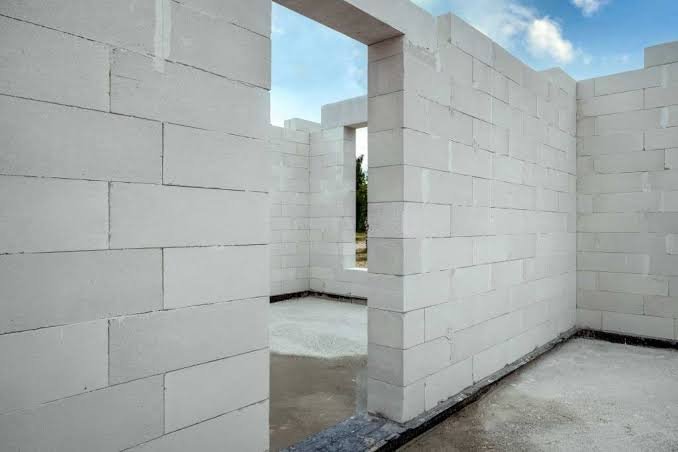
The construction industry is continuously adopting materials that can reduce building weight, improve construction efficiency and provide better performance. AAC blocks, or Autoclaved Aerated Concrete blocks, are one such modern masonry material.
AAC blocks are lightweight precast concrete masonry units manufactured using a mixture containing cement, fine silica-rich material, lime, gypsum, water and a small quantity of aluminium powder or paste. The manufacturing process creates a cellular structure containing numerous tiny pores, making AAC significantly lighter than conventional dense masonry.
AAC blocks are widely considered for residential, commercial and institutional buildings. However, like every construction material, they have both advantages and limitations.
The right question is therefore not simply whether AAC blocks are good or bad, but whether they are appropriate for the specific building and construction requirements.
What Are AAC Blocks?
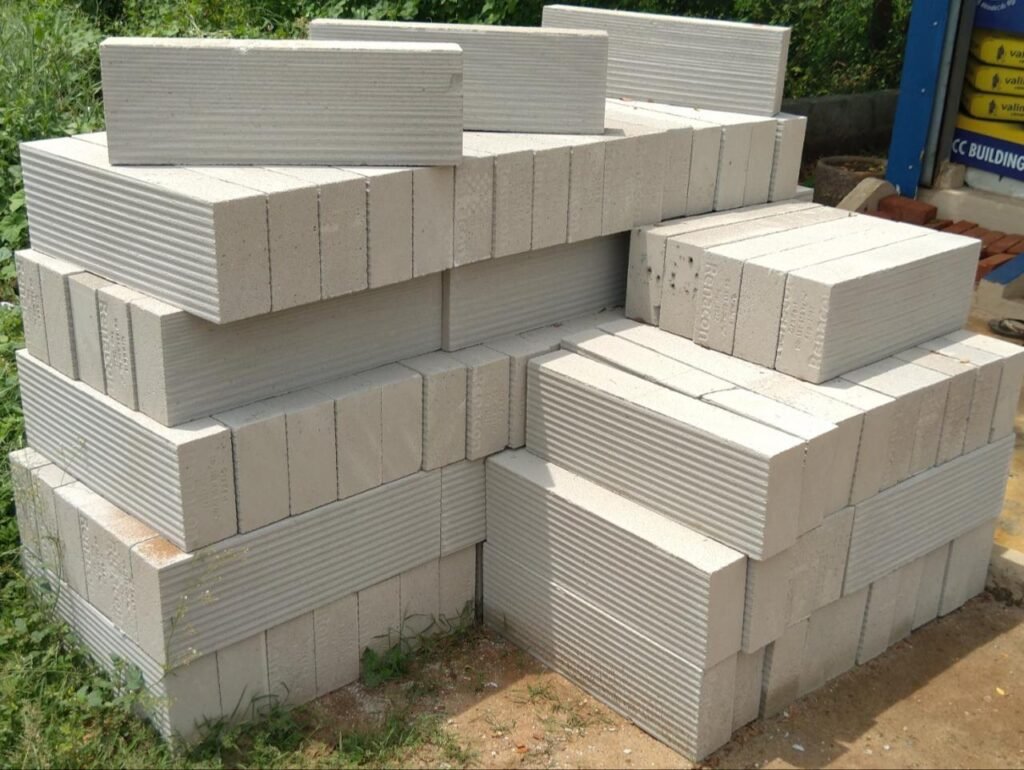
AAC stands for Autoclaved Aerated Concrete.
Unlike conventional concrete, AAC contains a large number of small, evenly distributed air pores. These pores are created during the manufacturing process through a controlled chemical reaction.
After the material is formed and cut into blocks, it is cured in an autoclave under controlled temperature and pressure.
This process gives AAC blocks their characteristic lightweight structure and engineering properties.
How AAC Blocks Are Manufactured
The manufacturing process generally begins by preparing the required raw materials.
Typical ingredients include:
- Cement
- Lime
- Silica-rich fine material
- Gypsum
- Water
- Aluminium powder or paste
The ingredients are mixed in controlled proportions.
The aluminium reacts within the alkaline mixture and produces gas, creating numerous small pores throughout the material.
The mixture expands and forms a large lightweight mass.
After the material reaches the required stage, it is cut into accurately sized blocks.
The blocks are then placed inside an autoclave, where controlled steam pressure and temperature accelerate the curing process and develop the desired properties.
Lightweight Construction
One of the most important advantages of AAC blocks is their low density compared with conventional dense masonry.
A lighter wall means a lower dead load on the building.
This can be particularly useful in:
- Multi-storey buildings
- Residential apartments
- Commercial buildings
- Renovation projects
- Buildings where reducing structural weight is beneficial
However, the actual structural benefit must be calculated by the structural engineer based on the selected block density and wall system.
Reduced Structural Dead Load
Walls contribute to the permanent load of a building.
Using lightweight AAC masonry can reduce the dead load compared with heavier masonry systems.
A lower dead load may influence the design of:
- Beams
- Columns
- Foundations
In some projects, this can provide opportunities for material savings in the structural system.
However, AAC blocks should not automatically be assumed to reduce the size of structural members. The structural design must be carried out based on actual loads and applicable design requirements.
Faster Masonry Construction
AAC blocks are generally larger than conventional clay bricks.
Because fewer units are required for the same wall area, masonry work can progress relatively quickly.
Larger units can reduce the number of:
- Horizontal joints
- Vertical joints
- Individual units handled
This can improve productivity when workers are properly trained in AAC masonry techniques.
Dimensional Accuracy
AAC blocks are manufactured using controlled industrial processes and cutting equipment.
Their relatively accurate dimensions can help produce more uniform walls.
Potential benefits include:
- Better wall alignment
- More consistent joints
- Reduced variations in surface level
- Improved finishing quality
However, accurate blocks still require accurate laying and proper workmanship.
Thin-Bed Jointing
AAC blocks can often be installed using a suitable thin-bed adhesive rather than conventional thick mortar joints.
The thin joints can help reduce material consumption and provide more uniform masonry.
The adhesive must be mixed and applied according to the manufacturer’s instructions.
The block surfaces should also be properly prepared.
Thermal Insulation
AAC’s cellular structure gives it useful thermal insulation properties.
The large number of air-filled pores reduces heat transfer through the masonry compared with many dense wall materials.
This can help improve indoor thermal conditions and potentially reduce cooling or heating requirements, depending on the building design and local climate.
However, overall building energy performance also depends on:
- Roof construction
- Windows
- Doors
- Insulation
- Building orientation
- Shading
- Ventilation
- Air leakage
AAC blocks are therefore only one part of the building envelope.
Fire Resistance
AAC is a non-combustible material and can provide useful fire-resistance characteristics.
Its fire performance depends on factors such as:
- Wall thickness
- Density
- Construction details
- Openings
- Finishes
Where a specific fire-resistance rating is required, the complete wall system should meet the applicable building requirements and available test data.
Sound Insulation
AAC walls can provide useful acoustic performance.
The actual sound insulation depends on the complete wall assembly, including:
- Block density
- Wall thickness
- Plaster
- Joints
- Openings
- Doors
- Windows
- Service penetrations
A properly designed AAC wall can provide good acoustic separation for many residential and commercial applications.
Reduced Mortar Consumption
Because AAC blocks can be installed using thin-bed adhesive, the quantity of jointing material can be lower than in conventional thick-joint masonry.
This can provide benefits such as:
- Reduced material use
- Cleaner construction
- Faster installation
- More uniform joints
The actual saving depends on block dimensions, wall design and installation practices.
Easier Handling and Cutting
AAC blocks are relatively lightweight and can be cut using suitable hand or power tools.
This makes it easier to create openings and adjust blocks around:
- Electrical conduits
- Plumbing
- Door openings
- Window openings
- Service installations
However, excessive cutting should be avoided because it can create unnecessary waste and weaken local areas if not properly detailed.
Applications of AAC Blocks
AAC blocks can be used in a variety of masonry applications.
Common applications include:
- External walls
- Internal partition walls
- Apartment buildings
- Office buildings
- Educational buildings
- Hotels
- Hospitals
- Commercial structures
Their suitability depends on the required structural, thermal, acoustic, fire and durability performance.
Limitations of AAC Blocks
Although AAC blocks have many advantages, they also have limitations that should be considered before selecting them.
Lower Mechanical Strength Compared With Dense Concrete
AAC is lightweight because of its cellular structure.
However, its compressive strength is generally lower than that of conventional dense concrete.
AAC blocks are therefore not interchangeable with structural concrete.
Their use in load-bearing masonry should be based on the specific strength grade, structural design and applicable standards.
Fragility During Handling
AAC blocks can be more vulnerable to damage from rough handling than some dense masonry units.
Dropping blocks or throwing them during transportation can result in:
- Broken corners
- Cracks
- Surface damage
- Material wastage
Proper storage and careful handling are therefore important.
Water Absorption and Moisture Behaviour
AAC is porous and can absorb water.
This does not automatically mean that AAC walls are unsuitable for wet or humid environments, but moisture management becomes important.
Walls should be properly protected through:
- Suitable external finishes
- Correct detailing
- Proper drainage
- Appropriate waterproofing where required
- Protection of exposed surfaces
The moisture behaviour of the complete wall system should be considered during design.
Fixing Heavy Items
Because AAC is relatively lightweight and porous, fixing heavy objects requires appropriate anchors and installation methods.
Normal fasteners may not always provide the required holding capacity.
Special fixing systems may be needed for:
- Cabinets
- Water heaters
- Heavy shelves
- Electrical equipment
- External fixtures
The fixing method should be selected according to the load and manufacturer’s recommendations.
Surface Finishing Requirements
AAC blocks provide relatively uniform surfaces, but finishing still requires appropriate preparation.
Depending on the project, walls may require:
- Suitable plaster
- Skim coating
- Render
- Surface preparation
- Protective coatings
The selected finishing system should be compatible with AAC.
Chasing for Services
Electrical and plumbing services often require channels within masonry.
AAC is relatively easy to chase, which is an advantage, but excessive or improperly positioned chasing can reduce the effective wall section.
Service channels should therefore be planned and executed carefully.
Transportation Cost
AAC blocks are lightweight, but they can occupy significant volume.
Transportation efficiency therefore depends on how many blocks can be loaded and protected during transport.
For projects located far from the manufacturing facility, transportation costs can reduce some of the economic advantages.
Local availability is an important consideration.
Requirement for Skilled Workmanship
AAC masonry may appear simple, but proper installation requires workers who understand the material.
Important practices include:
- Correct adhesive preparation
- Proper joint thickness
- Accurate alignment
- Appropriate curing or surface preparation where required
- Correct lintel and opening details
- Proper connection to structural elements
Poor workmanship can reduce the expected benefits of AAC blocks.
Compatibility With Other Materials
AAC walls connect with many other building components, including reinforced concrete columns, beams, slabs, windows and doors.
These junctions should be detailed carefully.
Poor detailing can contribute to:
- Cracking
- Water penetration
- Thermal movement problems
- Finish failure
The wall should therefore be considered as part of the complete building system.
AAC Blocks in Hot Climates
AAC’s thermal insulation properties can be useful in hot climates.
However, insulation alone does not guarantee a cool building.
A building’s thermal performance also depends on:
- Solar exposure
- Roof insulation
- Window design
- Shading
- Ventilation
- Air-conditioning efficiency
Good architectural design should therefore work together with AAC masonry.
Environmental Considerations
AAC can offer environmental advantages because its lightweight nature can reduce the amount of material required for certain wall applications and lower transportation loads.
Its industrial manufacturing process can also provide consistent material properties.
However, manufacturing requires energy, including energy for autoclaving.
Therefore, the environmental impact should be assessed across the entire life cycle rather than assuming that every AAC product is automatically environmentally superior.
AAC Blocks vs Traditional Bricks
AAC blocks and clay bricks have different characteristics.
AAC generally offers:
- Lower wall weight
- Larger unit size
- Faster masonry potential
- Good thermal insulation
- Accurate dimensions
Traditional bricks can offer:
- Familiar construction practices
- Wide local availability in many regions
- Good durability when properly manufactured
- Established supply chains
The correct choice depends on project requirements and local conditions.
AAC Blocks vs Concrete Blocks
AAC blocks and conventional concrete blocks are both manufactured masonry products, but their properties differ significantly.
AAC is generally much lighter and has better thermal insulation characteristics.
Dense concrete blocks can provide higher density and may offer different acoustic, strength and impact characteristics.
The choice should be based on:
- Required wall strength
- Weight
- Thermal performance
- Acoustic performance
- Fire requirements
- Cost
- Availability
- Construction method
Quality Control
Quality control is essential when using AAC blocks.
Before purchasing, the project team should verify relevant properties such as:
- Density
- Compressive strength
- Dimensions
- Moisture behaviour
- Thermal properties where required
Blocks should also be inspected for visible damage.
Using a reliable manufacturer and following applicable standards can help ensure consistent performance.
Where AAC Blocks Are Most Suitable
AAC blocks can be particularly useful when a project requires:
- Lightweight masonry
- Faster wall construction
- Thermal insulation
- Accurate wall dimensions
- Reduced jointing material
- Easier service installation
They are especially common in modern residential and commercial construction where reducing building weight and improving construction productivity are important objectives.
Conclusion
AAC blocks are an important modern masonry material offering several advantages, particularly lightweight construction, thermal insulation, dimensional accuracy, faster masonry and reduced jointing material.
At the same time, they have limitations related to strength, handling, moisture behaviour, heavy-item fixing, transportation and the need for suitable workmanship.
The decision to use AAC should therefore be based on engineering requirements rather than simply choosing it because it is a modern material.
When properly specified, manufactured, installed and protected, AAC blocks can provide an efficient and durable wall system for many types of buildings.
Lightweight in Structure, Efficient in Construction, but Proper Design Makes the Difference.
About The Author